


Former Helicopter Pilot Helps Others Transition from Military to Airline Flying
Navigating Complexities and Paying It Forward
While the military has long been a source of hiring for airline pilots, making the transition from one environment to the other can sometimes be difficult. After more than 23 years of flying reconnaissance and attack helicopters for the U.S. Army, F/O Tim Kirschbaum (Hawaiian), now an Airbus A330F pilot, not only had to adjust to a fixed-wing flight deck environment, but also contend with the differences in completing Part 121 flows and checklists and attaining the required FAA licenses.
Adding to this complexity, some servicemembers with helicopter backgrounds have occasionally encountered airlines that treat total rotary-wing flight time differently from that of fixed-wing aircraft.
Fortunately, Kirschbaum received some assistance along the way to an airline flight deck and is now “paying it forward.” As an executive vice president and cofounder of RTAG, a veteran-run 501(c)(3) nonprofit organization, he helps place former members of the military, regardless of their experience, in aviation and aerospace jobs.
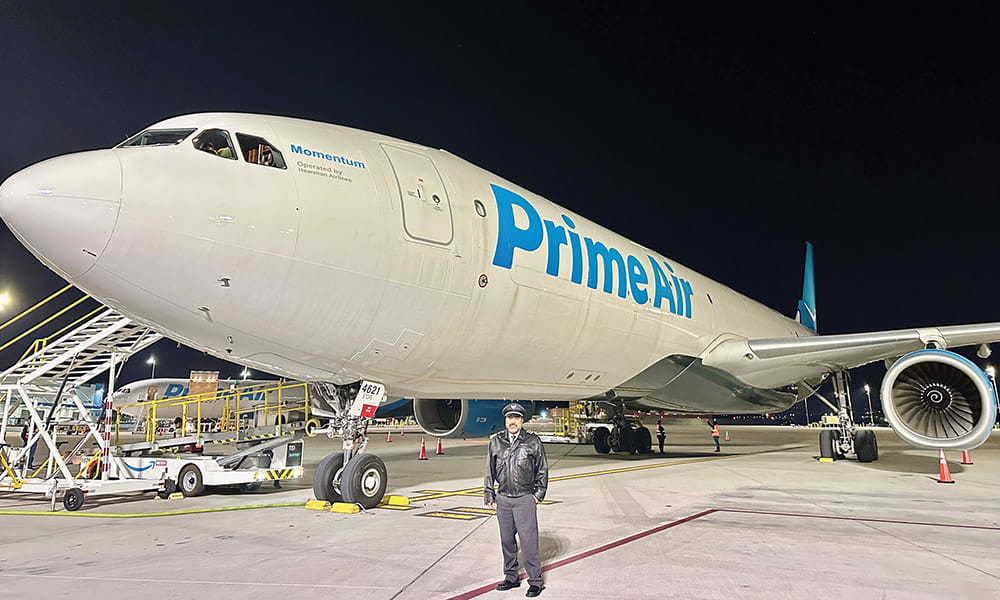
Path to the Airline Flight Deck
“I was destined to be in the Army,” said Kirschbaum, ALPA’s Membership Committee chair, who grew up on a variety of military bases and comes from a family with an extensive service history. He became interested in flying while in seventh grade after reading Gen. Chuck Yeager’s autobiography.
In high school, he also read a series of books about the Vietnam War, including Low Level Hell by Hugh Mills, which introduced him to helicopters. A ride in a Bell UH-1 “Huey” later helped affirm his enthusiasm for rotary-wing aircraft.
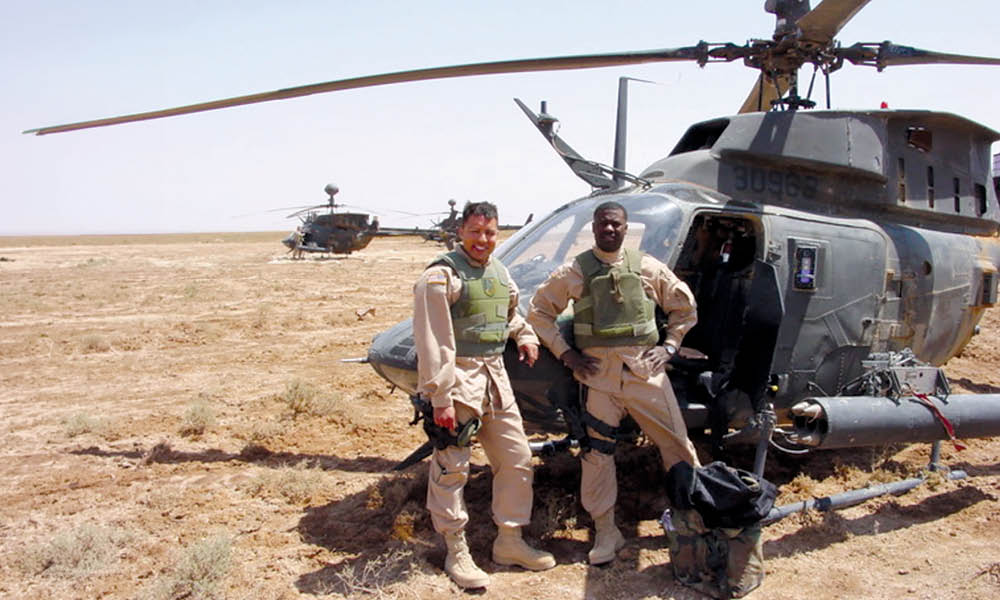
During his tenure with the Army, Kirschbaum served as a crew chief of Bell AH-1 Cobra helicopters and flew the Bell OH-58D Kiowa Warrior and Boeing AH-64D Longbow. He also acted as an air mission commander, tactical operations officer, and maintenance test pilot instructor/evaluator in addition to other roles. Kirschbaum completed six overseas combat tours in Iraq and Afghanistan, and his combat awards include three Bronze Stars and six Air Medals.
While in Afghanistan in 2017, he ran into a fellow pilot and friend who happened to be looking at the Envoy Air Rotor Transition Program website. Kirschbaum soon learned that he could use his VA benefits and funding from Envoy to transition to an airline job.
He returned to the United States that same year and attended an Army Aviation Association of America Convention in Dallas, Tex. After talking with representatives from several airlines, he was hired by PSA and flew for the carrier from 2018 to 2021.
Building Community: The Dirty Dozen
During this same period, Kirschbaum engaged with a large group of military veterans using a popular social media platform to highlight the availability of airline flying jobs and the requirements involved. However, the armed forces were encountering pilot-retention problems during this period and began cracking down on Internet boards that promoted this kind of activity.
Kirschbaum and 11 others (known as “the Dirty Dozen”) soon moved their efforts to a new social media location. After expanding operations and raising funds, the group held its first convention as the Rotary to Airline Group (now RTAG) in Savannah, Ga., in 2018. “We expected maybe a hundred people to show up but were pleasantly surprised when more than 700 walked through the door,” remarked Kirschbaum.
Since then, RTAG has continued to stage annual conventions, initially holding these events in cities where large populations of military pilots were based. However, the organization has broadened its scope and now places all kinds of servicemembers in all types of air transport jobs.
Meanwhile, Kirschbaum earned a B.S. degree in aviation management from Everglades University in 2020. He was employed by Air Transport International the following year, and flew for the airline until 2023, when he was hired by Hawaiian Airlines.
“Servicemembers are some of the most sought-after candidates for aviation jobs because of their backgrounds, training, and discipline,” Kirschbaum commented. “At RTAG, we work to ensure that when they interview for these positions, they’re fully prepared to make the best impression possible.”
Transitioning to Airline Flying?
Do you know someone with a military background who’s pursuing an airline job? RTAG’s website provides valuable information and resources.

Featured Articles


