


A Pilot's Perspective in Congress
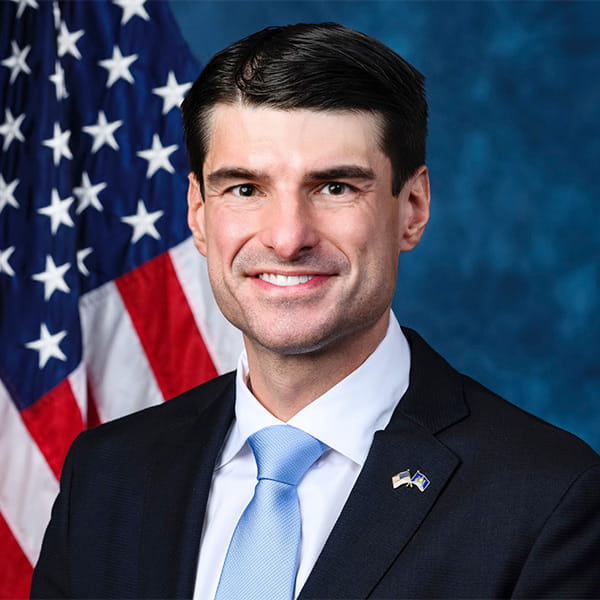
During my time in Congress, I’ve had the privilege of fighting tirelessly on behalf of the piloting profession, and it’s a fight I take personally. My aviation legislative priorities are straightforward: mandating integrated ADS-B technology on all aircraft to provide real-time traffic alerts and situational awareness for pilots, rejecting single-pilot operations, protecting pilot mental health, and promoting science-based fatigue rules for all-cargo airline operations.
Most members of Congress come to aviation safety as a policy matter. I come to it differently. I’m a licensed helicopter pilot, and that changes how I see my job as a lawmaker. In Congress, advocating from real-life experience is the most passionate way you can bring your personal expertise into a complex issue. It’s one thing to study aviation safety from a briefing book. It’s another to have lived it.
ADS-B
Take ADS-B. When we were fighting for ADS-B requirements in the Rotorcraft Operations Transparency and Oversight Reform Act and the Airspace Location and Enhanced Risk Transparency (ALERT) Act, I kept coming back to my own experience flying. ADS-B In is about giving pilots the situational awareness they need in real time, and I don’t see why we wouldn’t implement technology that most of our new student pilots are using. This technology is already in the hands of the next generation of pilots. Our regulations need to catch up.
I use ADS-B In every time I fly. It gives situational awareness that you simply don’t have otherwise. When using this technology, I can see where other aircraft are, ascending and descending, and their direction of flight. In 2026, there’s no reason that we shouldn’t be utilizing each and every available piece of technology. That’s why I was proud to push for mandatory integrated ADS-B In in the House of Representatives markup of the ALERT Act. Equipping pilots with better tools, better data, and better information is a commonsense step toward preventing accidents and improving operational safety.
That’s really the thread that runs through all of my aviation priorities.
Pilot Mental Health
Protecting pilot mental health means building a system where pilots can get help without fear that it will end their careers. Rejecting single-pilot operations is about making sure we never trade away redundancy and safety margins on the flight deck. And science-based fatigue rules for all-cargo airline operations means holding every part of this industry, not just passenger carriers, to standards grounded in actual research on how fatigue affects performance.
I don’t think you can separate any of these from the fact that real people are flying these aircraft and their well-being and their safety margins aren’t line items. They’re the whole point.
Advocacy Based on Personal Experience
Being a pilot myself doesn’t make me right about every policy question that comes across my desk in Congress. But it does mean that when I advocate for these issues, I’m doing it from firsthand experience, not just from a policy brief. And I think that matters, especially on issues as complex as these.
I’m grateful for the chance to keep pushing for ADS-B In, for protecting the mental health of pilots, for championing stronger cargo fatigue rules, and for pushing back against single-pilot operations because I believe real progress for the piloting profession gets made one fight at a time.
Listen to the Full Interview
This article was excepted from a recent episode of the Air Line Pilot Podcast with ALPA president Capt. Jason Ambrosi. For the full conversation, including more on Bresnahan’s background as a helicopter pilot and his work on the Rotorcraft Operations Transparency and Oversight Reform Act and the Airspace Location and Enhanced Risk Transparency Act, listen now by searching your favorite podcast platform for “Air Line Pilot Podcast.”

Featured Articles


