


Air Safety Organization Groups ‘Get Things Done’
Air Safety Forum Private Days
ALPA’s Air Safety Organization (ASO) four pillars of Aviation Safety, Aviation Security, Pilot Assistance, and Aviation Jumpseat gathered at the 70th Air Safety Forum in Washington, D.C., on September 14–17 with councils, committees, and groups conducting individual meetings to discuss priorities and goals. These meetings brought together Association volunteers with industry and government experts to collaborate on shared priorities and continue on a shared path for success.
Capt. Wendy Morse, the union’s first vice president and national safety coordinator, highlighted the importance of the ASO’s work at the forum and throughout the year. “We’re very proud of ALPA’s track record,” she proclaimed. “We get things done, and it’s because of all of you sitting in these seats here this week.”
Security Council and Forum
The Security Forum hosted various ALPA pilot leaders and industry partners from United Airlines, the Transportation Security Administration, the Federal Bureau of Investigation (FBI), and the National Counter Terrorism Center.
The first day of the Security Forum included presentations from the Association’s industry partners on security priorities and activities. One presentation discussed leveraging the current safety structure at Delta to address and advance the way security work and incidents are managed—a priority of F/O Bryan Patchen (Delta), the union’s Aviation Security Group chair; another reviewed the current state of the Federal Flight Deck Officer (FFDO) program, an ALPA advocacy priority.
The second day of the forum brought together the Association’s pilot leaders, ALPA staff, and Delta Air Lines counsel who discussed
- ALPA’s aviation security advocacy, including preserving and expanding the FFDO program and protecting aviation safety and security.
- Legal issues such as limitations on captain’s authority, support for pilots abroad, crimes on board aircraft, and federal versus state and local jurisdiction.
- Effective communication skills as pilots take on their aviation security advocacy work.
- Information on the security app Factal, available to all ALPA pilots.
- The impact of stress and trauma, with a review of the union’s resources available to all pilots, the science behind stress and trauma, and best practices for managing both.
The Security Council was convened on the final day of the Air Safety Forum by Patchen and facilitated by Capt. Kurt Schuster (JetBlue), ALPA’s Security Council chair. Aviation Security Committee chairs from 20 master executive councils (MECs) discussed crewmember security awareness, layover security, overflight of threatened airspace, and airline decisions to fly into or around conflict zones.
The group discussed risk assessments and briefings that airlines should perform prior to, during, and after flying into or around conflict zones to ensure crewmembers are prepared, informed, and supported by the airline in every stage. The group received a briefing on the Association’s Accident/Serious Incident Hotline, what they should expect when receiving a call from a pilot, and best practices to ensure that the pilot calling receives the support they need. Additional discussions included the status of the Known Crewmember® to Crewmember Access Point transition, support for the FFDO program, cybersecurity, and unmanned aircraft system threats.
Jumpseat Council and Forum
Many of the presentations during this year’s Jumpseat Forum, which took place the week following the 25th anniversary of the 9/11 terrorist attacks, referenced that tragic day. In addition to the resulting 3,000 fatalities and the enormous destruction, the airline pilot jumpseat privilege was forever changed. It transitioned from an informal, courtesy-based system into a highly restricted, federally regulated security protocol. An initial panel discussion, moderated Capt. Paul Emery (United), the union’s Aviation Jumpseat Committee vice chair and this year’s Aviation Jumpseat Award winner, provided several senior pilots and an FBI agent with the opportunity to comment on what they witnessed on 9/11 and how they were affected.
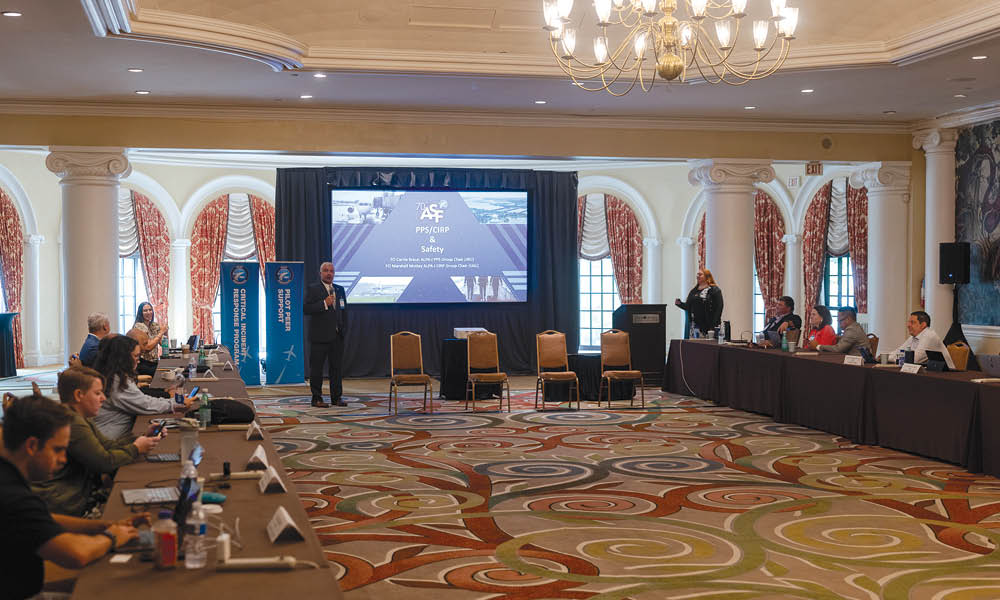
Capt. A.J. Berlotti (Alaska), ALPA’s Aviation Jumpseat Committee chair, one the panelists, was compelled to return his aircraft to the gate at Dallas Fort Worth International Airport rather than takeoff. “It was a somber day, one that I hope none of us has to live through again,” he said.
Jumpseat Forum presentations included a panel on the ALPA app. Another panel discussion addressed the conditions and terms major carriers are looking for when pilots from smaller airlines seek to establish agreements. Panelists from Delta Air Lines, United Airlines, and American Airlines stressed the need for reciprocity.
Additional presentations featured talks about working with management and the government to establish policy changes and the importance of exhibiting proper etiquette and adhering to protocol when jumpseating. The latter discussion addressed the role of the Professional Standards Committee when conflicts arise.
The Jumpseat Forum also featured two brief breakout sessions—one addressing all-cargo pilot groups and the other Canadian pilot groups.
Prior to the Jumpseat Forum, ALPA’s Jumpseat Council, made up of Jumpseat Committee chairs/coordinators from the Association’s 42 pilot groups, convened to share property updates and to elect Capt. Rob Ventura (United) as the new Jumpseat Council chair.
Safety Council
Safety representatives from across ALPA gathered to compare emerging risks, exchange successful practices, and strengthen the connections among the Association’s safety programs.
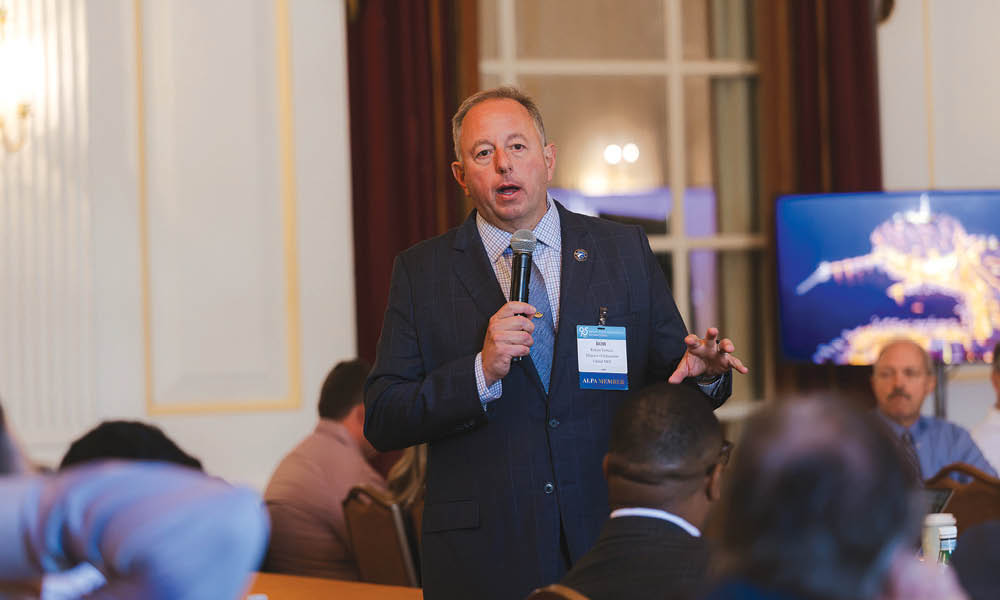
Capt. Mike Kendrick (JetBlue), the union’s Safety Council chair, along with Capt. Andrew Lepkowski (Kalitta Air), the vice chair, encouraged participants to break down organizational silos and draw on the experience of colleagues from different airlines and operating sectors. Although pilot groups face both common and carrier-specific challenges, he said, the council provides a forum in which every representative can contribute and learn.
“Everybody here is equal,” Kendrick remarked. “It doesn’t matter what size your airline is, or what you fly. We’re all here doing the same job, dealing with many of the same safety issues—as well as some unique to our own operations.”
That collaborative approach remained a central theme throughout several days of presentations and panel discussions. Capt. Steve Jangelis (Delta), the union’s Aviation Safety Group chair, reviewed ALPA’s national safety priorities and emphasized the importance of preparing every pilot group to be able to respond effectively to an accident or serious incident. Capt. JC Patchell (Jazz Aviation), the Canadian Aviation Safety coordinator, outlined the Association’s engagement with Canadian regulators and industry partners, as did Capt. Tim Perry, ALPA Canada president, who came by to listen to discussions.
“I want to ensure that we’ve trained people on all properties,” said Jangelis. “Some of the bigger properties have a deep bench. Some of the small carriers don’t. That’s why we’re here.”
Council members also examined a wide range of operational and emerging risks. Discussions addressed cargo operations, fatigue, regional-airline safety programs, aircraft design, cabin environmental hazards, aeromedical certification, lithium batteries, and the growing use of artificial intelligence. Participants considered how new technologies can improve safety analysis and discussed data protection, transparency, and human oversight.
The conversations during these meetings repeatedly returned to the importance of voluntary reporting, technical expertise, communication, and connecting local safety representatives with one another and with the Association’s national resources. Those connections can turn individual pilot group experiences into collective action on behalf of all ALPA pilots.
Pilot Assistance Forum
Capt. Travis Ludwig (United), the Pilot Assistance Group chair, presided over the Pilot Assistance Forum, which was attended by more than 60 pilots. Committee chairs provided updates on their programs, including Aeromedical, Canadian Pilot Assistance, Critical Incident Response (CIRP), Pilot Peer Support (PPS), and Professional Standards.
Capt. Billy Petersen (JetBlue) and Capt. Bob Jones (Alaska) gave a special presentation about the Human Intervention Motivation Study (HIMS)—ALPA’s alcohol, substance use, and addiction treatment program. They also emphasized that HIMS representatives can be a resource for Pilot Assistance Committees working with pilots.
F/O Anna-Maria Scorsone (JetBlue), the Health and Environmental Working Group (HEWG) chair, discussed the progress the group has been making to address cabin temperatures, cabin air quality (smoke and fume events), and cosmic radiation. In the past year, HEWG members provided input to three studies on these topics conducted by the National Academies of Science, Engineering, and Medicine.
Participants also broke into small groups to discuss actions to improve ALPA’s Pilot Assistance program. The discussion generated a variety of innovative ideas, such as tabletop exercises with other ASO pillars and the implementation of virtual town halls.
Joint Training Council and Human Factors & Training Group Meeting
Capt. Aric Newsted (United), the union’s acting Training Council chair, and Capt. Todd Lisak (JetBlue), the Association’s Human Factors & Training Group chair, welcomed participants to the joint meeting of their two groups during the Air Safety Forum.
The meeting included briefings on ALPA’s participation in two aviation rulemaking committees (ARCs): the Air Carrier Training ARC and the Human Factors Task Force ARC. A representative from the FAA also provided an update on human factors at the agency and spoke with the group members about their thoughts and concerns.
Capt. Jeremy Lind (United), his pilot group’s Training Committee chair, led a discussion on training for international operations, with that information being used to develop an informative guide for Training Council participants. F/O Mariko Doskow (United), the union’s Safety Management Systems (SMS) Group chair, and Capt. James Norman (Delta), the vice chair, provided the group with an update on an ongoing visual go-around safety risk assessment.
Pilots also discussed the use of virtual reality as a training supplement at their properties, including observed and potential benefits or drawbacks of integrating virtual reality into their training programs. The group also reviewed how different training programs collect feedback from trainees and how to best advocate for pilots or instructors who encounter difficulties during the training process.
Canada Breakout
The Canadian breakout session was chaired by Patchell. Participants were welcomed by Morse and Capt. Gilles Boissonneault, ALPA Canada vice president, who asked attendees to pause for a moment in memory of the pilots of Jazz Flight 8646.
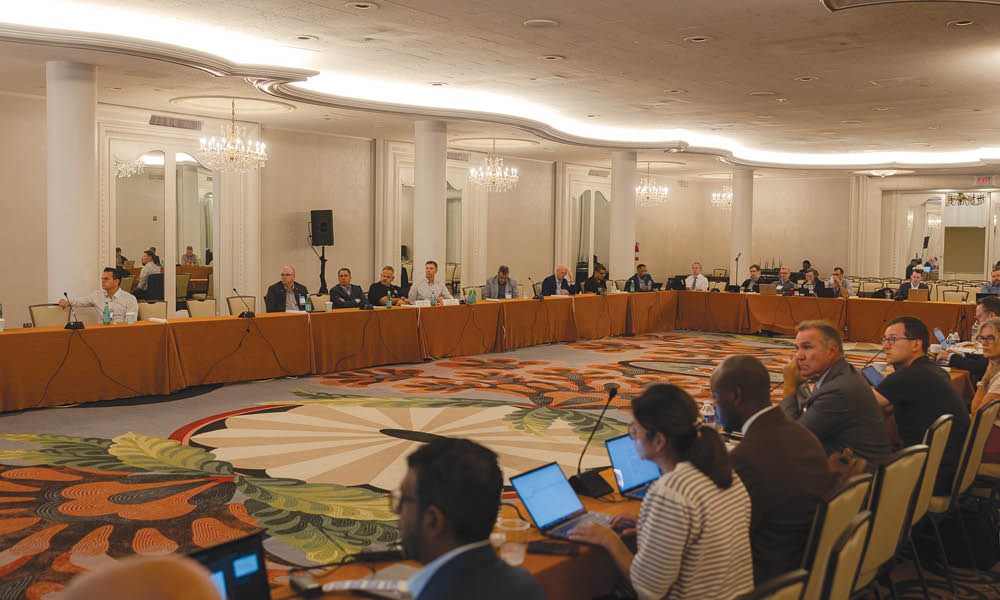
Morse addressed topics including flight time/duty time, as well as SMS, emphasizing that as pilots they’re all in this together. Boissonneault discussed several safety initiatives, including ALPA’s advocacy to uphold flight- and duty-time regulations.
The meeting also featured four presentations on topics covering positive safety culture, supporting commercial space launch operations within the national airspace system, the investigative process in Canada, and a Transportation Safety Board (TSB) of Canada update.
Attendees also heard about the Transport Canada industry safety collaboration and protected voluntary information sharing program, followed by updates on the Canadian Commercial Aviation Safety Team and Canadian flight data monitoring.
Other topics discussed during the meeting included recent developments in the ALPA Canada SMS Course, operational health and safety, flight time/duty time, and ASO training courses and schedules.
The meeting concluded with a Central Air Safety Committee Q&A on topics presented in the morning and afternoon sessions.
Cargo Committee Meeting
“The Association’s Cargo Committee is responsible for threat awareness and advocacy for all types of cargo transportation,” F/O Jim Perry (FedEx Express), ALPA’s Cargo Committee chair, reminded the group.
With the current emphasis on pilot mental-health advocacy, the committee explored whether chronic fatigue issues in cargo-only operations can lead to higher levels of mental-health issues.
Presentations included a discussion on the current state of fatigue science and mental health, the focus on specific shift-work research at the FAA’s Civil Aerospace Medical Institute, and how this correlates to the schedules for cargo-only pilots. F/O Carrie Braun (JetBlue), the union’s PPS chair, focused on the Association’s PPS program and the resources the Association provides members when they’re dealing with personal or work stressors.
Attendees also received briefings on current ALPA advocacy and legislative initiatives, including the Rotorcraft Operations Transparency and Oversight Reform Act and Mental Health in Aviation Act, plus an update on the financial status of the air cargo industry.
A member of the FAA’s Commercial Aviation Safety Team (CAST) gave an update on recent activities, including the two cargo accidents that occurred in the past 10 months. According to CAST, cargo operations have an order-of-magnitude greater fatality risk than passenger operations, so the industry must remain vigilant about emerging risks in cargo operations and continue pursuing safety enhancements to reduce the increased accident rate further.
In addition, the committee discussed ALPA’s HEWG work on cabin air quality education.
Dangerous Goods Meeting
The Dangerous Goods meeting focused on personal electronic devices (PED) and how to address the risk of thermal-runaway events and lithium battery fires. Capt. Dave Schlichting (FedEx Express), the Dangerous Goods program director, described thermal runaway as one of the primary risks related to lithium-ion batteries.
The group received a briefing on the European Union Aviation Safety Agency’s research related to the carriage of PEDs and lithium batteries in the cabin, along with thermal-runaway incident statistics over a five-year period.
FedEx Express provided a briefing on how it’s dealing with lithium battery fires along with a presentation on results from its safety risk assessments, sharing mitigation strategies and the importance of risk assessment, among other topics.
A Boeing representative also led a discussion on the differences between active and passive cargo fire-protection systems in lower deck Class C compartments and upper deck Class E cargo compartments. The group examined different risk-mitigation strategies when transporting large quantities of lithium-ion cells or batteries and the importance of risk assessments.
Remote Operations
The Remote Operations Committee meeting, which was chaired by Capt. Cliff Sheppard (United), opened with welcome remarks and a review of the committee’s policy and objectives. The agenda covered a wide range of topics regarding diversion airport planning, including Canadian northern domestic operations and broader Pacific region developments. Samantha Walter, United’s senior manager of Offline Diversions, briefed the committee on United’s use of third-party Euro Jet to coordinate support at offline stations and highlighted recent challenges with overnight responsiveness and local disruptions. Committee members suggested having Dispatch notify the necessary parties earlier regarding diversion decisions when time permits so that proper preparations can begin.
Canadian Pilot Assistance
Capt. Jacques Gendron (Air Transat), the Association’s Canadian Pilot Assistance Group chair, led a full day of updates and presentations on a variety of pilot assistance topics. Capt. Allan Marshall (WestJet) discussed the increasing presence of professional standards programs at Canadian airlines and how to promote the program at their properties.
Capt. Matthew Chaisson (Porter) confirmed there are now 50 trained CIRP volunteers in Canada, although more are needed in the western part of the country. The goal is to cross-train CIRP volunteers in PPS for greater flexibility during an accident response and provide continuity for a pilot who needs both programs.
Capt. Dana Chepil (Calm Air) reminded Canadian PPS volunteers about the importance of self-care and remarked that there are more than 90 trained PPS volunteers in Canada.
Capt. Krista Roberts (WestJet Encore) discussed the Canadian Aeromedical Support Program (CASP) 2.0, which is an advisory service specific to Canadian pilots. CASP provides an efficient referral process to Transport Canada and is actively working to build a stronger relationship with the agency.
Capt. Ryan Bradford (Air Transat), the Pilot Recovery Program (PRP) chair, provided an update on the activities of the PRP and Aircrew Recovery Canada (ARC). These programs have been in existence for many years and were created to support pilots suffering from problematic substance use, harmful use of substances, and/or substance use disorder—mild, moderate, or severe. There are currently PRP chairs at WestJet, WestJet Encore, Jazz Aviation, Flair, Canadian North, Porter, Air Transat, and Air Canada where the program is called Pilot Health and Rehabilitation Program. The work required to establish and implement PRPs at other ALPA Canada pilot groups continues.
ARC and ALPA Canada PRP websites will be launched before the end of the year.
Aeromedical Meeting and Training
Topics at the Aeromedical Committee meeting, chaired by F/O Rick Mahoney (Delta), included case studies for neurologic conditions such as epilepsy, traumatic brain injuries, and migraines; the basics of brain health for aviators; metabolic health and prevention, focusing on chronic conditions such as high blood pressure and obstructive sleep apnea; and how to reduce cardiovascular risk. Federal Air Surgeon Dr. Susan Northrup discussed recent changes in aeromedical guidance, the Pilot Bill of Rights, and current notices for proposed rulemaking.
Mahoney also led a half-day Aeromedical 101 training for 17 pilots, which included an overview of the group’s structure, confidentiality, aeromedical roles, resources, and case studies. New to this year’s training was a module highlighting some of the differences between how the FAA and Transport Canada deal with aeromedical issues.
CIRP Meeting
“It’s wonderful to have our CIRP leaders from many carriers in the room to discuss the best ways to help a pilot who needs help processing their reactions to a work-related event,” said F/O Marshall Motley (United), ALPA’s CIRP Committee chair. “I’m especially happy to welcome the CIRP leadership teams from six non-ALPA pilot groups.”
Meeting attendees were reminded why a coordinated response is so important for the pilot involved in a work-related accident or incident to help support their mental health.
Participants viewed a demonstration of the new CIRP training footprint and techniques implemented over the past year, including rewriting the training scenarios to provide an even more realistic response to an event.
The group also attended a joint session with PPS and the union’s Safety Council to discuss speaking with pilots who’ve experienced an aviation incident or accident. While both CIRP and PPS are designed to support the pilot in need, they respond to different events. The presentation helped provide a better understanding of the similarities and differences between PPS and CIRP, including the types of events each group responds to and the process of those different responses.
PPS Meeting and Chairs Meeting
Braun led two sessions with PPS subject-matter experts (SMEs) and chairs. The SMEs discussed how to increase collaboration with management to secure more support of PPS. Participants also brainstormed ways to increase PPS volunteer engagement.
The MEC PPS chairs focused on the importance of cross-pollination with other ASO committees, legal issues related to use of sick leave for mental-health issues, and ideas for fostering better communication via Microsoft Teams.
Braun also gave a presentation on PPS to the Security Council, the Safety Council, and the Cargo Committee. This cross-pollination helped to increase collaboration with other pillars of the ASO.
Professional Standards Meeting
Professional Standards Committee chairs and leaders from 10 pilot groups met with Capt. Jason Graves (JetBlue), the Professional Standards Committee chair, and Capt. Nick Richardson (FedEx Express), the vice chair, along with committee SMEs. Attendees discussed current issues and hot topics and upcoming 2027 training events and began planning for a 2028 Professional Standards Forum.
Petersen and Jones provided an overview of the HIMS program and gave an update on issues the ASO is working on related to education and outreach. Attendees also discussed new resources being developed to help promote professional standards and ALPA’s Code of Ethics.
HEWG Meeting
The HEWG meeting, led by Scorsone and Capt. Todd Moore (FedEx Express), reviewed the important work addressing occupational health and safety issues affecting pilots.
Scorsone opened the meeting by introducing a guest who served as a committee member on the recently concluded FAA-commissioned independent study “Assessing Radiation Exposure, Health Outcomes, and Mitigation Strategies for Flight Crewmembers” by the National Academies of Sciences, Engineering, and Medicine. The key message from the discussions was the need for flight crew unions to collaborate and continue advocating for stronger FAA regulatory provisions addressing occupational radiation exposure, including education, mandated monitoring, tracking, and mitigation, drawing lessons from other entities with mandated programs.
The meeting also included a demonstration on extracting airline-specific data related to fume events from the FAA’s Service Difficulty Reporting System, a conversation on updating the Association’s white paper “Pilots’ Occupational Health and Safety,” and plans to continue to engage other safety stakeholders to improve information sharing and promote consistent advocacy efforts.
Chief Accident Investigator (CAI) Refresher
F/O Mike Wickboldt (United), ALPA’s Accident Investigation Board (AIB) chair, welcomed attendees and introduced guest speakers. The Canadian TSB provided board updates and discussed ALPA coordination during TSB investigations, while the NTSB gave an overview of the organization, provided an in-depth look into operational factors investigations, and discussed interviewing best practices. Capt. Ryan Greene (Frontier), his pilot group’s CAI, discussed his work as an accident investigator, how he grew his accident investigation team, lessons learned, and how to balance ALPA volunteer work and personal life. He also reviewed a future CAI symposium.
Accident Analysis & Prevention Meeting
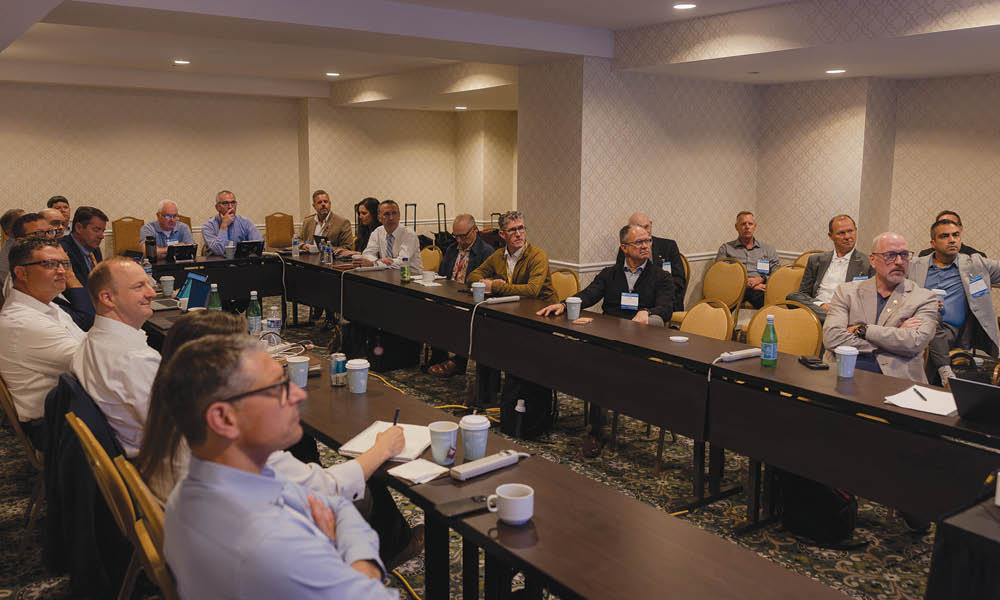
Capt. Jeff Mee (United), the union’s Accident Analysis & Prevention Group (AAP) chair, outlined the subgroups under AAP and briefed attendees about the Association’s efforts with CAST and the International Federation of Air Line Pilots’ Associations.
Presentations included a review by Capt. Chris Duggan (Air Canada) of the challenges Canadian pilot groups are experiencing with flight data monitoring; an overview of the Safety Information Analysis Program (SIAP) resources and a discussion on potential regulation changes; and an update on current dangerous goods issues, including lithium-ion battery concerns.
Aircraft Design & Operations Meeting
Capt. Chris Sidor (United), the union’s Aircraft Design & Operations (ADO) chair, opened the meeting with a discussion regarding ALPA’s support for integrated Automatic Dependent Surveillance–Broadcast (ADS-B) In technology. Industry representatives from Boeing and Boom Supersonic gave presentations on future technologies in their aircraft and the impact these technologies have on line pilots.
Airbus, Boeing, Collins Aerospace, and Pratt & Whitney representatives reviewed new advancements to their aircraft and their visions for the future of aircraft design and operations.
Other topic discussions included unmanned aircraft systems, flight test harmonization, spectrum developments, artificial intelligence, and reduced crew operations.
Airport & Ground Environment Meeting
Capt. Jeff Sedin (United), the Association’s Airport & Ground Environment (AGE) chair, highlighted the need to increase the number of airport safety liaisons (ASLs) across North America while enhancing their visibility, effectiveness, and the overall value of the ASL program. If you’re interested in volunteering as an ASL, please contact ASL@alpa.org.
The AGE Group is looking to move beyond isolated airport-level efforts and toward more standardized, nationally scalable initiatives focused on ASL engagement, airport rescue and firefighting familiarization, airport pilot reporting, runway safety, wildlife hazard mitigation, and airport safety advocacy.
A recurring message throughout the meeting was that regulatory compliance alone doesn’t necessarily equate to safety. The AGE and the ASL’s role is to identify opportunities to enhance airport safety beyond minimum regulatory requirements while ensuring that ALPA line pilots have a meaningful voice in airport operations and safety-related decision-making.
Air Traffic Services Meeting
Capt. Craig Boxrucker (Alaska), the union’s Air Traffic Services (ATS) Group chair, focused the meeting on the challenges of modernizing U.S. and Canadian airspace systems, airspace integration of new entrants, global harmonization of air traffic operations, and new technology to improve air traffic management.
Attendees heard presentations on airspace modernization, commercial space operations, industry collaboration and industry priorities, and FAA workgroup updates.
Group members also provided updates on areas such as ADS-B, RTCA Special Committee standards development, ATS policy/position development, and the work plan for the remainder of 2026 and 2027.
ADO/AGE/ATS Joint Session
The ADO, AGE, and ATS Groups gathered together during the forum for a joint meeting led by Sidor, Sedin, and Boxrucker. Attendees discussed new entrants into the airspace and how to safely and effectively manage these new technologies in an airspace historically dominated by airlines.
SIAP Meeting
The SIAP Group meeting, led by Capt. Steve Taglia (Delta), focused on program resources available to pilot groups to assist with program conflict resolution and education around best practices. Participants discussed emerging data access and data use cases. Topics included the use of data for efficiencies in climb optimization and emerging technologies.
In addition, the FAA’s Suzette Rash shared developments regarding the Aviation Safety Action Program, Flight Operations Quality Assurance, and voluntary disclosure reporting and advisory circular guidance. The breakout session discussed changing uses of safety program data and ALPA’s necessary continued engagement.
SMS Meeting
The SMS Group, chaired by Doskow, discussed active initiatives including ongoing safety risk analyses, the development of a Canadian SMS Course, and strategic planning through the end of 2027. Members of the FAA’s Safety Management Branch gave a briefing on voluntary programs and SMSs. In a panel discussion, representatives from two ALPA groups and two independent pilot unions discussed successful collaboration with other safety committees and labor groups to improve safety within their carrier’s SMS. The meeting concluded with a safety risk analysis exercise to equip participants with practical skills for effective SMS participation.


Air Safety Organization
ALPA's Air Safety Organization (ASO) has shaped the industry for decades and continues to advocate for pilots, passengers, and shippers worldwide. Learn more about how we work with industry stakeholders and government regulators to strengthen the future of air travel.

Featured Articles


