


Pilot Employment Trends: Outlook Remains Strong
Hiring Normalizes After Unprecedented Post-Pandemic Rates
Airline pilot employment is closely linked to the broader economy and airline growth plans. The industry significantly downsized in response to the collapse in air travel demand following the onset of the COVID-19 pandemic and adopted programs to accelerate early retirements, which resulted in approximately an additional 3,600 pilots retiring in 2020 versus an expected 2,200 mandatory retirements. As public-health conditions stabilized, air travel rebounded in 2021 and 2022 at a faster rate than air carriers anticipated, as the popular meme of “revenge travel” described this phenomenon. To meet reemergent consumer travel demand, air carriers responded by attempting to quickly hire additional staff, particularly pilots, to rebuild their operations.
Pilots Hired by Major U.S. Airlines Annually
Note: FAPA’s “Major U.S. Airlines” category includes Alaska/Hawaiian, Allegiant, American, Atlas, Delta, FedEx Express, Frontier, JetBlue, Spirit, Southwest, United, and UPS. FAPA’s method of tracking U.S. major airline pilot hiring leads to double counting, since pilots at smaller carriers move on to larger carriers. FAPA estimates the double counting to be no greater than 15% of the total reported.
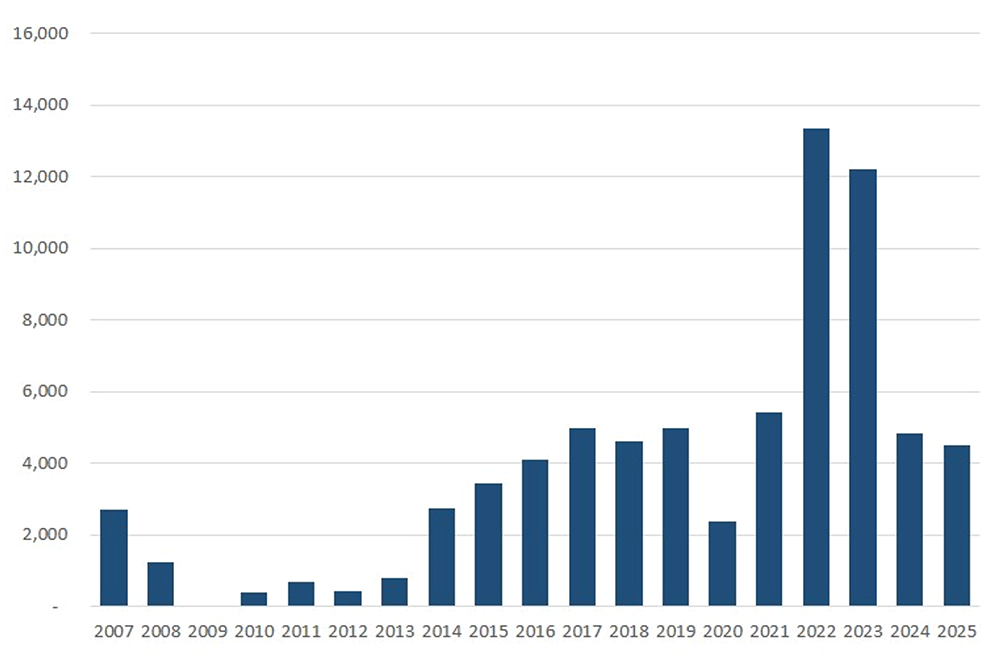
In 2022 and 2023, the 13 largest U.S. passenger and cargo airlines hired a combined 25,553 pilots, according to information from Future & Active Pilot Advisors (FAPA). The unprecedented scale of hiring during this period reflected a unique combination of post-pandemic recovery, rapid capacity restoration, aircraft reactivation, and intense competition for qualified pilots. The high hiring levels that began in late 2021 and continued through fall 2023, averaging above 1,000 pilots per month, resulted in elevated levels of attrition in the industry’s fee-for-departure and low-cost segment.
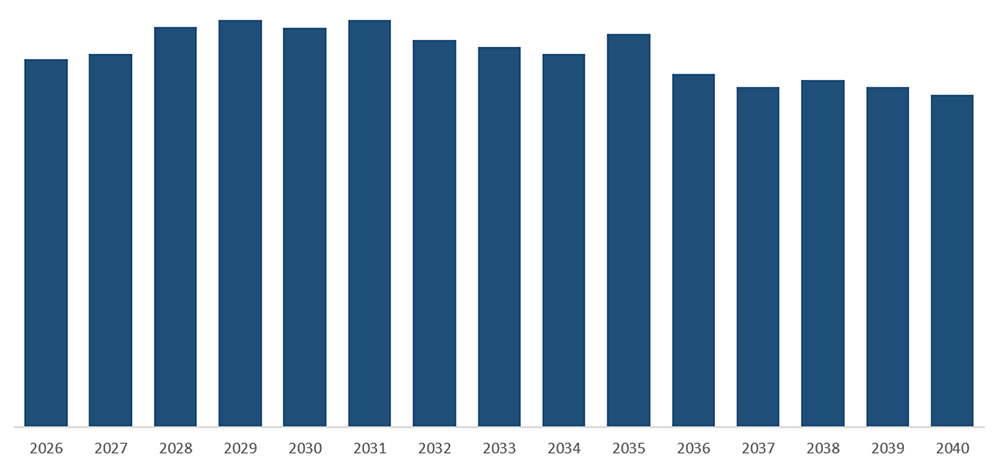
By 2024, the industry began to show signs of returning to normalized trends in hiring, more dictated by individual airline growth plans and anticipated pilot retirements rather than a response to global events. For full-year 2024 and 2025, FAPA reported 4,834 and 4,509 pilot hirings, respectively. This hiring rate is more in line with the 2016–2019 period when major air carriers averaged approximately 4,600 new hires a year. Likewise, FAPA estimates 42,000 retirements over the next 15 years (an average of 2,800 pilots retiring annually)—with the “Baby Boomer” generation of pilots retiring by the end of 2029. The near-term retirements will trend above the long-term average, with annual retirements expected to average above 3,000 for 2028–2031.
Major Airline Pilots Reaching Age 65
A Recent 74% Surge
For the past few years, some airlines didn’t hire any pilots as they adjusted their network, fleet, and product plans. However, there’s been a recent uptick in pilot hiring. Over the 12 months ending July 2026, the 13 largest air carriers tracked by FAPA recorded 3,863 pilot hirings—a 74% increase compared to the 2,215 pilots employed over the same period in 2025. This hiring surge is being led by the largest airlines, with Delta, American, and Southwest increasing their hiring rates over last year. Meanwhile, although United is currently hiring at a lower rate than in 2025, the air carrier has hired more pilots than any other carrier since 2022.
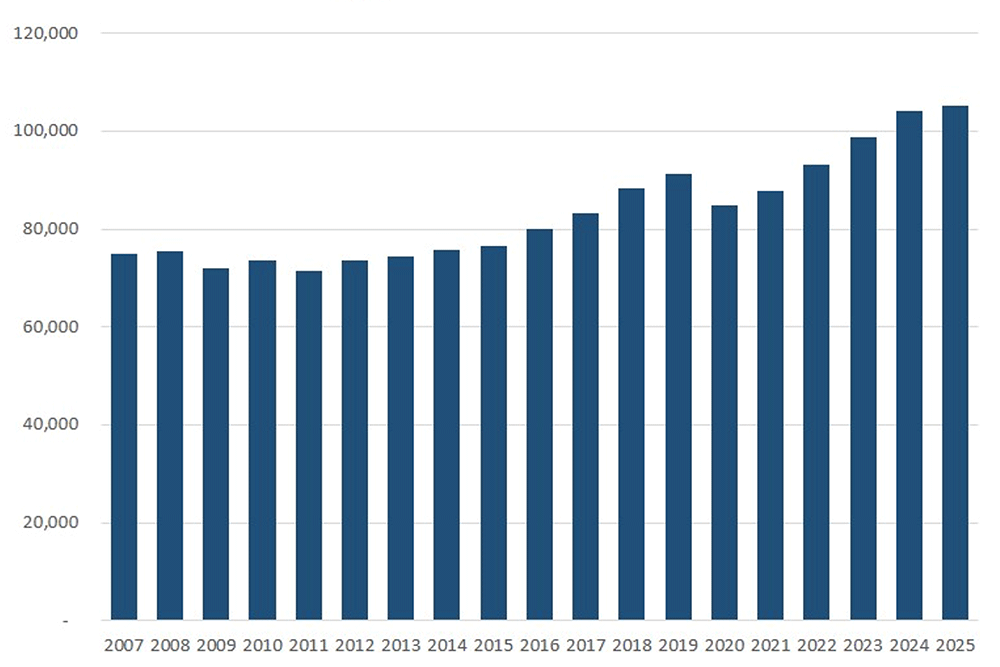
Holistically, the total number of employed pilots has continued to grow since 2020. According to the U.S. Department of Transportation’s Bureau of Transportation Statistics, U.S.-based air carriers employed 105,244 pilots in 2025. This represents the highest number of employed pilots ever recorded. The year-over-year percentage increase in 2025 slowed to 1.5% after three consecutive years averaging almost 6% year-over-year growth.
Among the 10 largest U.S. airlines by pilot workforce in 2025, representing 78% of employed pilots, United led in terms of absolute year-over-year growth in pilots, increasing by 801 pilots (+4.9%), followed by American with +774 pilots (+5.4%), and Delta with 482 additional pilots (+3.2%). In terms of year-over-year percentage growth, SkyWest, the largest fee-for-departure air carrier, led with 6.2% growth, representing +306 pilots.
U.S. Carriers Pilot Employment
The largest declines in absolute pilot workforce were experienced by FedEx Express (-667 pilots, -13.2%), which was impacted by the loss of a long-term air cargo contract with the U.S. Postal Service along with ongoing corporate restructuring initiatives. Southwest’s pilot count declined by 364 (-3.2%) as the airline cut back staffing at its Denver, Colo., and Atlanta, Ga., bases.
Of the remaining largest air carriers by pilot workforce, only UPS and Alaska/Hawaiian experienced an increase in pilots. UPS hired 170 pilots (+5.3%) as it ramped up for the U.S. Postal Service air cargo contract that began in the fourth quarter of 2024. Alaska /Hawaiian hired 70 pilots (+1.5%), driven by hiring at Hawaiian. Atlas Air saw a decline in pilots (-188 pilots, -6.6%) as the air cargo operator ended its contract providing crew, maintenance, and insurance services for 25 converted freighters with Amazon Air’s network in mid-2025. JetBlue’s pilot workforce shrunk by 144 (-3.2%), with the air carrier offering a voluntary early separation program that 67 pilots accepted.
High Demand for Aircraft Is Good for Pilots
The outlook for airline pilots remains strong when viewed through the lens of projected aircraft demand. Boeing’s 2026 Commercial Market Outlook forecasts global demand for 43,625 aircraft over the next two decades, including 22,150 for growth and 21,475 for replacement, with 6,470 retained from the current fleet of 27,945. In North America alone, air carriers are expected to require 8,405 aircraft, including 6,275 replacements and 2,130 growth aircraft over the next 20 years, supported by an estimated 2.7% annual traffic growth.
To meet the expected annual fleet growth rate of 1.2% and to replace retiring pilots, Boeing is forecasting that 122,000 pilots will need to be hired in North America over the next 20 years—an average annual demand of 6,100 new pilots.
Data shows that there’s long-term strength in the pilot pipeline to support the forecasted growth. The FAA reported 126,900 active airline transport pilot (ATP) multiengine land (MEL) certificate holders with first-class medical certification in 2025, a 1.9% increase over the prior year. Over the past five years (2021–2025), an average of 8,521 new ATP-MEL certificates were issued annually. Another positive indicator is the steady growth in certified flight instructors, a key source of future airline pilots. Between July 2021 and July 2026, the number of instructors with valid medical certificates increased from 82,469 to 107,155 (up 30%).
Trends Also Positive in Canada
Canada’s aviation sector is also experiencing strong growth in pilot employment after experiencing consecutive declines in 2020 and 2021.
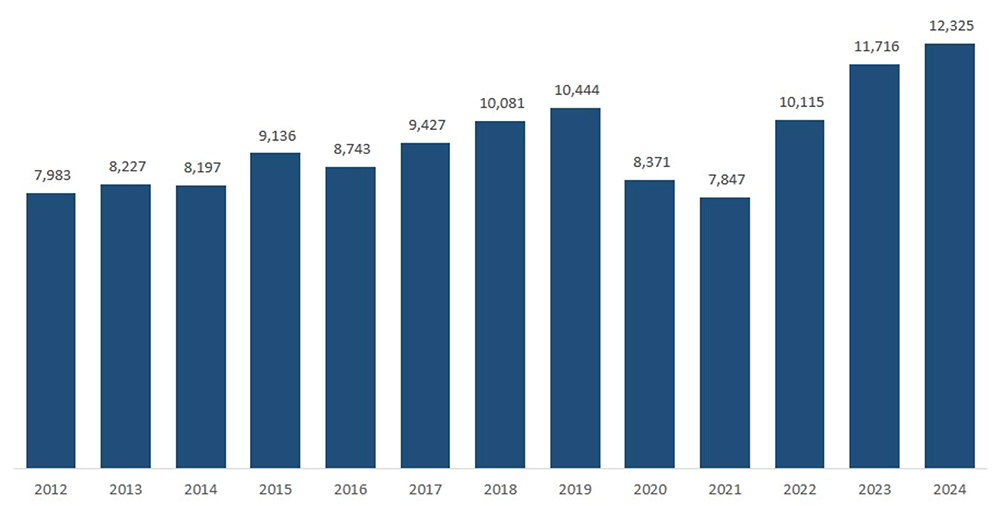
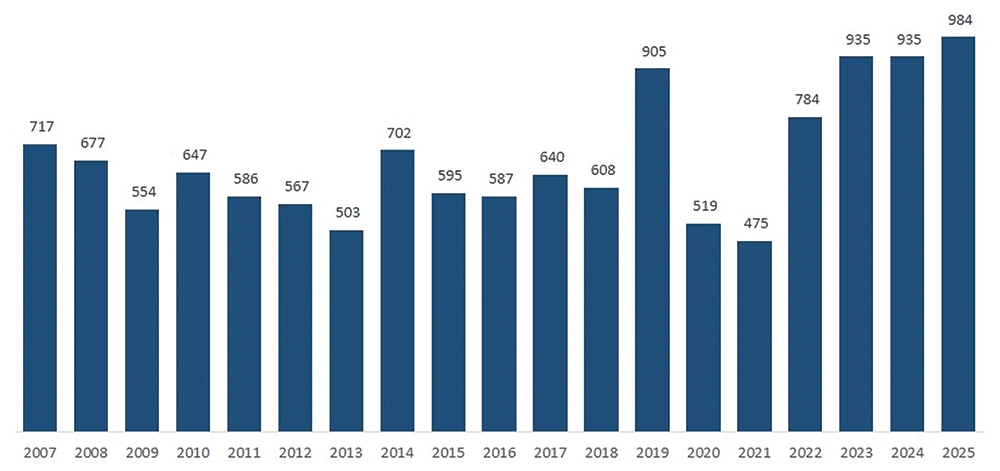
According to Statistics Canada, the average number of employed pilots and copilots increased by 609 (+5.2%) in 2024 after strong growth in 2022 and 2023 of 28.9% and 15.8%, respectively. Yet, pilot supply has struggled to keep pace with this upward trend. In 2023, Transport Canada estimated that over the next five to six years, a shortfall in the range of 7,600 to 14,500 pilots will exist. While Transport Canada data shows that airline transport pilot licensing has improved and has been above 900 pilots since 2023, this is short of the projected demand for 2,200 pilots annually.
Canada - Pilots and Copilots - Canadian Air Carriers, Levels I and II
Canada - Airline Transport Licenses Issued Annually
Long-Term Supply and Demand
Overall, any analysis of the pilot supply and demand dynamic shows that the industry is normalizing after an extraordinary postpandemic hiring cycle in which pilots became a critical asset and the limiting factor of airline management growth ambitions. Airlines were recruiting pilots from other carriers, especially in segments that traditionally provided lower overall compensation and benefits relative to major airlines.
As air carriers move into a more normalized hiring environment, most airlines are now focused on securing a pilot supply that supports their long-term plans and network strategies. Record pilot employment levels and strong aircraft order books, coupled with a robust pilot pipeline, indicate the outlook for pilot supply and demand remains stable and well-supported well into the next decade.

Featured Articles


