ALPA Members: The Known Crewmember outage remains ongoing. The system provider is working to restore service in the next few days.
Article


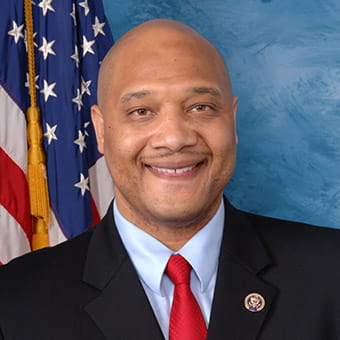
Air Line Pilot sat down with Rep. André Carson (D-IN), who has represented Indiana’s 7th Congressional District in the House of Representatives since 2008 and is the ranking member on the House Aviation Subcommittee, to talk about his efforts to promote airline safety and security.
Air Line Pilot: Tell us about your background and your district.
Rep. André Carson: I’m a long-standing activist, dedicated to making life more affordable for my constituents. I’m proud to fight for the middle class and have secured more than $1 billion in federal funding to benefit Indianapolis, Indiana. My district is the proud home of the best midsized airport in North America. Indianapolis is the capital of the state and a growing hub for conventions, technology, and culture. As a lifelong Indianapolis resident, I’m proud of my roots and bring a practical Midwestern sensibility to Congress.
You’ve been a long-time champion for the requirement for secondary barriers on the flight deck since coming to Congress. Why have you made that a priority and how have you worked with ALPA over the years?
Carson: I’ve worked on secondary flight deck barriers for many years, since I first met Ellen Saracini, who talked to me about a long-known safety risk that should be easy to fix. In 2018, I offered an amendment to the FAA Reauthorization Act to require secondary barriers on all passenger airliners to protect the flight deck. The industry opposition to this amendment was immediate. During the committee debate, I made the case that as a former law enforcement officer, I knew we had a responsibility to fix a known safety risk before more lives were lost. I urged my colleagues to do the right thing. Fortunately, the amendment passed the committee, the House, and was finally enacted. Behind the scenes, opponents lobbied the FAA to slow walk implementing the regulations. In the 2024 FAA reauthorization, we reaffirmed and clarified the requirements. The slow implementation was shameful, including an industry filing last year to delay implementation even further. ALPA has been my partner in this work from the start, and I’m glad that despite the slow start, we’re finally making progress.
You’ve also cosponsored the Safe Skies Act to require one level of safety for passenger and all-cargo airliners, specifically as it relates to flight and duty time for cargo operations and ensuring that all pilots are well-rested. Do you see that bill moving forward?
Carson: Yes, I strongly believe we need one level of safety for airline passenger and all-cargo flights. This is particularly true for the human factors that impact pilots’ ability to fly safely. An alert and well-rested pilot is the safest pilot. I’d love to see this bipartisan bill approved by the House Transportation and Infrastructure Committee this year. But we need to build cosponsors to help demonstrate strong support on both sides of the aisle. If that happens, I think we can get this bill passed.
ALPA remains very focused on a final aviation safety bill relating to the January 29, 2025, midair collision at Washington National Airport that will implement NTSB recommendations to make aviation safer. What’s the outlook for getting this done this year?
Carson: We’re working now with our Senate colleagues to address their outstanding concerns and to find some consensus between our House Airspace Location and Enhanced Risk Transparency Act and the Senate’s Rotorcraft Operations Transparency and Oversight Reform Act. These conversations and negotiations can be painstaking, but they can also be productive. I believe we all want a final bill that can pass both chambers with strong, bipartisan support. We’re not there yet, but I’m optimistic that we’ll get this across the finish line before the end of this Congress.