


How Pilots Can Better Navigate Workplace Challenges
ALPA's Professional Standards Forum
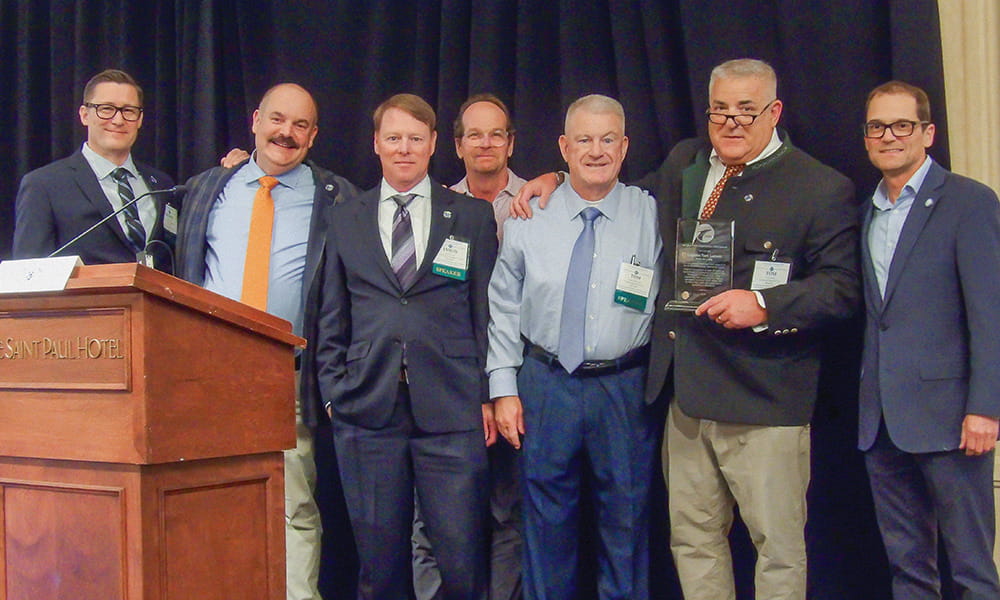
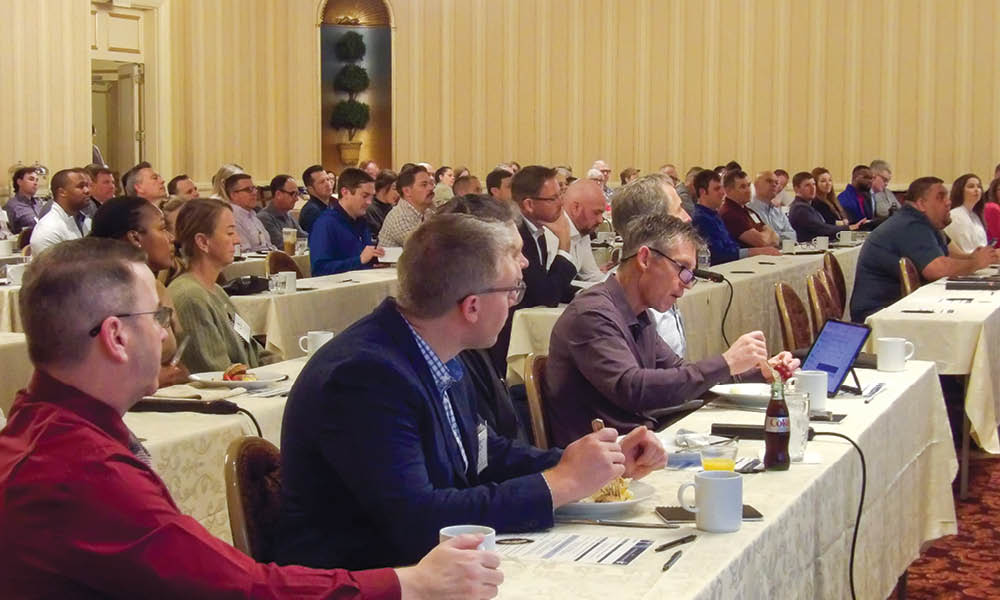
One hundred and thirty-seven participants representing 11 ALPA pilot groups, along with dispatchers, air traffic controllers, flight attendants, and other labor organization representatives, gathered on April 14–15 in St. Paul, Minnesota, for the Association’s Professional Standards Forum. Over two days of presentations and panel discussions, attendees examined conflict in the workplace, how pilots and other aviation professionals work together in an increasingly complex operating environment, and what that means for safety. Capt. Tom Letson (Delta), then ALPA’s Air Safety Organization (ASO) Professional Standards Group chair, and Capt. Jason Graves (JetBlue), then the vice chair, presided over the meeting.
The Association’s Professional Standards program is a peer-driven, nonpunitive process for resolving interpersonal conflict. Sources of conflict are frequently shaped by fatigue, stress, rapid operational change, and the pressures of a profession in transition. The union’s Professional Standards volunteers have become part of a larger ecosystem of safety, support, and collaboration across various aviation employee workgroups.
“Our job as pilots is challenging,” said Capt. Jason Ambrosi, ALPA’s president, in his remarks to attendees. “Continuous decision-making, operational issues, aircraft system failures, and everything we face are most effectively addressed when two pilots leverage their training, experience, and professionalism to bring the flight to a safe conclusion. This forum is focused on improving how we work together beyond just pilot to pilot on the flight deck. As we can see with attendance by air traffic controllers, dispatchers, and airline representatives, we’re improving how we collaborate in every aspect of our work with the highest level of professionalism.”
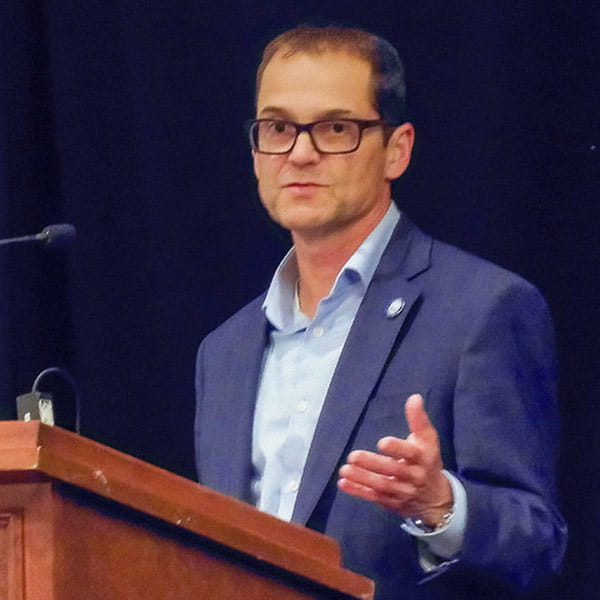
David Thompson, a certified forensic interviewer with extensive experience working with law enforcement and consulting on investigations, spoke to forum participants about interview techniques for empathy-based conflict resolution. He discussed a variety of strategic communications tools he uses to build rapport, demonstrate empathy, and engage in meaningful and constructive dialogue.
“My goal is to give you some insight into how communication works,” Thompson remarked. “How it is that memory works, how we can ask better questions, and how sometimes we ask the wrong questions. Our goal is to get as much information as possible, and to make sure that the people we’re talking with leave the conversation feeling respected, heard, and understood.”
For Professional Standards volunteers, peer-support conversations usually occur at challenging moments, often when a pilot is frustrated, defensive, or reluctant to engage. These conversations become more difficult when communication is degraded by external factors, like stress and fatigue.
Capt. Travis Ludwig (United), the Association’s Pilot Assistance Group chair, noted that peer-support programs play a critical role in helping pilots manage personal and professional challenges before they affect performance. By addressing these issues proactively, Professional Standards and other Pilot Assistance programs can help keep personal struggles from becoming operational risks.
But Ludwig also stressed the need for peers to monitor their own well-being. “Volunteer work can be stressful and emotional,” he observed. “You need to take care of yourselves. We tell our passengers when the oxygen mask drops, put the oxygen mask on yourself before you put it on somebody else. Case work is no different—it will always be there. But if you don’t take care of yourself first, you’re not going to be around to take care of the case.”
Fatigue is a contributing factor frequently associated with Professional Standards cases. Capt. Doug Marchese (JetBlue), the union’s Flight Time/Duty Time Committee chair, highlighted the ways in which sleep loss, circadian disruption, and workload can impair decision-making, communication, and teamwork. Fatigue can manifest subtly, affecting mood, patience, and the ability to process information, potentially contributing to misunderstandings or conflict on the flight deck.
“There was a study in the 1990s on correlating blood alcohol content [BAC] with fatigue,” said Marchese, noting the detrimental effects resulting from lack of sleep. “What was found was that, in terms of reaction time and decision-making, 16 hours awake was the equivalent of approximately .05 BAC, and 24 hours awake was equivalent to about .10 BAC.” A pilot may not always recognize how much fatigue at the end of a long duty period can affect performance or interactions with other crewmembers.
Capt. Tom Thornton (Delta), his pilot group’s Professional Standards Committee chair, moderated a panel discussion regarding how ALPA’s Professional Standards fits within a broader network of peer-driven support initiatives. Heather Healy, director of the Association of Flight Attendants (AFA) Employee Assistance Program (EAP), along with Patrick Carter and Christopher Keyes of the National Air Traffic Controllers Association (NATCA) National Professional Standards Workgroup, discussed similarities between their respective programs. Each relies on trained peers to address conflict, provide support, and promote professionalism through nonpunitive means. According to Healy, 38 percent of the AFA’s 53,000 flight attendants received assistance from AFA EAP in 2024, with approximately 16,000 calls handled by 250 peers. Carter and Keyes said that NATCA’s peer-support program currently has more than 400 committee members.
Suzanne Kalfus, a senior attorney in ALPA’s Legal Department, spoke about legal considerations affecting Professional Standards committees and their work during a members-only session. She emphasized the importance of confidentiality and not maintaining permanent records. Kalfus also highlighted cases in which social media posts have led to terminations and disciplinary action, and stressed the need for awareness, education, and proactive engagement to mitigate these risks—as well as the need for clear policies regarding social media.
In addition, she cautioned volunteers about their own use of social media. “You are ALPA, and what you say and do has implications for the Association.”
Dr. Janette McMurtrie, a retired American Airlines captain and mental-health professional with more than 50 years of aviation experience, discussed the importance of mental health and stress management. She highlighted the shift from reactive to proactive approaches, the impact of COVID-19, and the importance of understanding different personality types among pilots.
Doug Baj, director of ALPA’s Communications Department, delivered a presentation on strategies to better communicate with and educate Association members about the union’s priorities and resources available to them. He stressed the importance of coordinated messaging and highlighted communications tools like master executive council newsletters, podcasts, videos, and social media for their efficiency in reaching pilots.
Graves covered escalation protocols for Professional Standards cases, stressing confidentiality and proper communication channels. “Anytime we have a Professional Standards case that needs to leave our committee for one reason or another, whether it goes external to another union or it just goes to another committee, we consider that an escalation,” he remarked. “There are protocols for that, and processes that we need to go through to make sure that we’re maintaining confidentiality, utilizing the right resources, and letting people know what we’re doing with the case.”
The forum also marked a moment of transition for ALPA’s Professional Standards leadership. Letson, who’s served for decades as a leader within the union’s Professional Standards community, is stepping down from the position.
He was recognized for his contributions in shaping Professional Standards into a respected and effective resource across the Association. Under Letson’s leadership, the program expanded its reach and strengthened its relationships both within ALPA and with industry partners. “What a journey I’ve had,” he said. “It’s enriched and fulfilled my life beyond measure.”
With this transition, Graves is now the group’s chair.
The Association’s Code of Ethics, first established in 1956, continues to serve as a guiding framework, emphasizing accountability, respect, and a shared commitment to professionalism. In an industry shaped by rapid change and increasing demands, those principles provide a stable foundation to build upon and prepare the next generation of Professional Standards volunteers.
“We’re all human with our own experiences, challenges, and needs, and by offering nonjudgmental peer support, we’re able to keep issues off the flight deck,” Ambrosi stated. “Thank you for all you do to enhance how we work together in our union and in our workplaces.”
Meet Your Professional Standards Group
Falling under the ALPA Air Safety Organization’s Pilot Assistance umbrella, Professional Standards helps pilots uphold ALPA’s Code of Ethics, resolve conflicts, and maintain a professional, respectful work environment.
Members: Visit the Group's Page

Featured Articles


