


From ‘Ned’s Kids’ to Battle Stars: Spirit Pilots Made Union History
Spirit Airlines was born in Detroit, Michigan, and that cradle of the American labor movement birthed, in turn, a generation of feisty, resilient union pilots who triumphed in ALPA’s only strike in the past 25 years. Sadly, the airline ceased operations in May due to world events and years of poor management choices.
The company that ultimately became Spirit began life as a Detroit-based trucking business. It branched out into aviation in 1983 with a startup airline called Charter One, owned by Ned Homfeld, a vacation tours operator. Homfeld’s name, combined with the airline’s FAA code of NKS, gave rise to a nickname for Spirit’s crews that they’d wear proudly for the next four decades: “Ned’s Kids.”
By 1992, Charter One had acquired DC-9s and changed its name to Spirit Airlines. By 1996, its pilots had voted to unionize and join ALPA.
After bargaining successful contracts in 1999 and 2003, the pilot group began to face significant slowdowns in negotiating a third collective agreement. Now owned by an equity fund, in 2008 CEO Ben Baldanza furloughed pilots and demanded concessions. With little to no progress by 2010, the National Mediation Board took the extremely rare action of releasing Spirit pilots to go on strike.
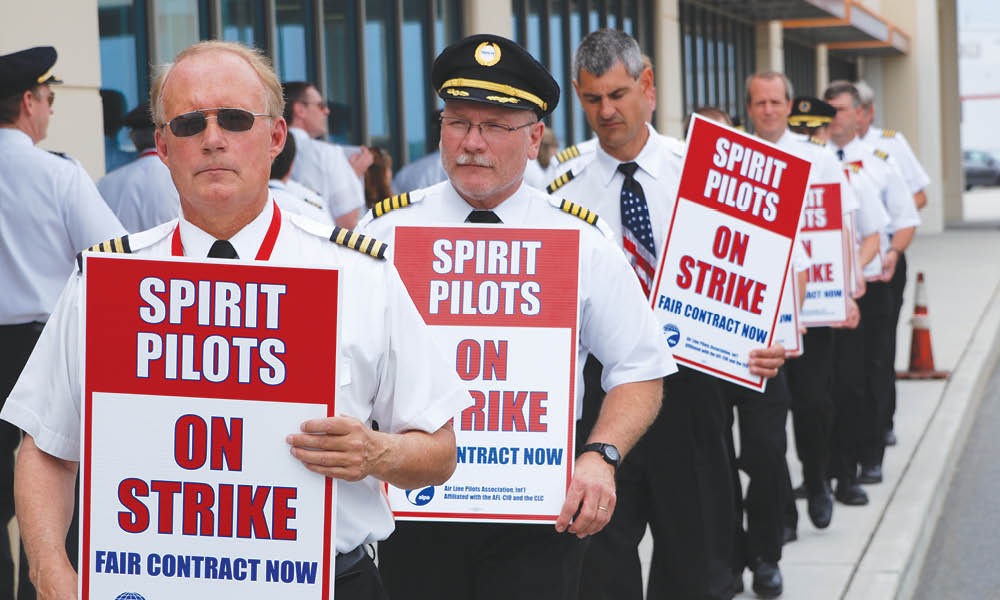
On June 12, 2010, hundreds of Spirit pilots and their families, joined by ALPA and non-ALPA pilots, flight attendants, and other airline employees from more than a dozen carriers in the U.S. and Canada, began walking picket lines at Spirit bases in Detroit; Fort Lauderdale, Fla.; and Atlantic City, N.J. In the words of then ALPA president Capt. John Prater, “Not an airplane moved. Not a wheel turned. And not one of the nearly 500 pilots of Spirit Airlines crossed the picket line.”
The strike lasted five days. The same management that had originally demanded $21 million in concessions wound up signing a contract with almost $74 million in improvements for the pilots, including some quality-of-life language that’s still industry-leading today.
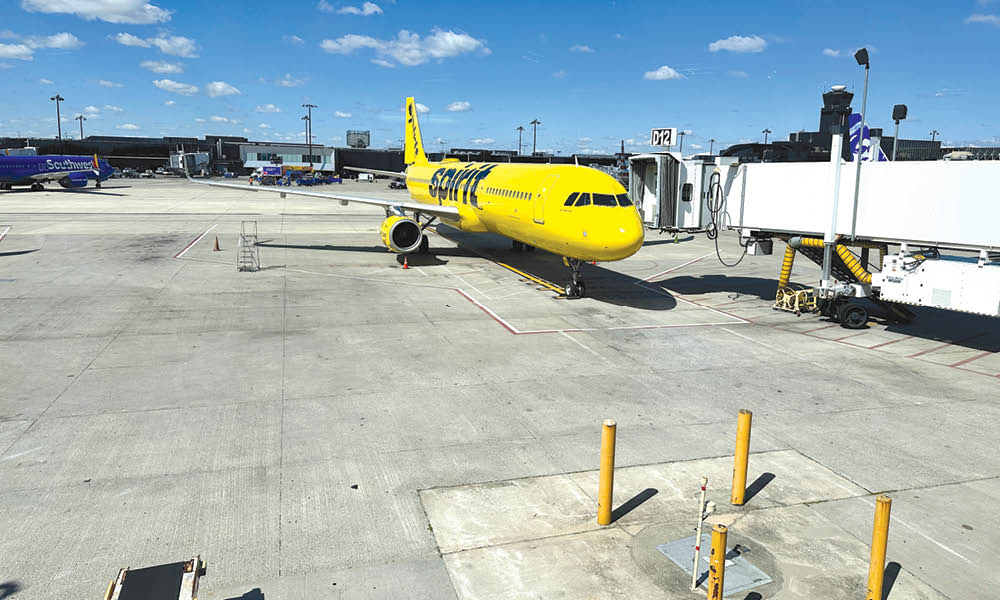
After the strike, Spirit expanded rapidly to become the nation’s preeminent ultra-low-cost carrier (ULCC). It added dozens of new aircraft and hired thousands of pilots.
The pilot group built on the gains of the 2010 strike contract with an even better 2018 agreement, and weathered the COVID-19 pandemic by bargaining eight separate memorandums of understanding that saved almost every pilot job. At its high, Spirit employed more than 3,700 pilots.
But fault lines developed in the 2020s. Mainline carriers successfully figured out how to compete with the ULCC model by offering bare-bones fares, and Spirit’s planned mergers with rivals Frontier Airlines and JetBlue Airways fell apart. Problems with Pratt & Whitney engines on some of the carrier’s Airbus neo aircraft created challenges to maintaining operational reliability, and the airline’s rapid growth caused it to overextend and fall deeply into debt. By 2026, Spirit had declared bankruptcy twice in two years.
The end came as fuel prices continued to skyrocket as a result of the Iran war. Investors refused to extend more credit, and a proposed government buyout never materialized. Spirit abruptly ceased operations on May 2, putting 17,000 employees out of work, including more than 2,000 pilots. Multiple ALPA pilot groups immediately responded in solidarity by working with their respective airlines to secure preferential interviews and accelerated hiring for the displaced Spirit pilots.
Over its almost 30-year history with ALPA, Spirit pilots became known for their many industry-leading contract improvements; outstanding safety record, with no lost airplanes and no fatalities suffered; and strong union participation. Several Spirit pilots have chaired ALPA national committees, and the pilots’ Master Executive Council (MEC) chair who led the strike, Capt. Sean Creed, was ALPA’s vice president‒administration/secretary at the time Spirit ceased operations.
“Spirit pilots have proven time and time again that solidarity is more than just a union motto; it’s a choice you make, especially when everything is on the line,” Creed remarked. “Every step of the way—a strike, a pandemic, two bankruptcies, and a shutdown—we’ve felt the losses together and have never stopped fighting for each other. That’s not just union pride; that’s family.”
“For a small carrier, I think we punched well above our weight,” said Capt. Stuart Morrison, a former Spirit MEC chair.
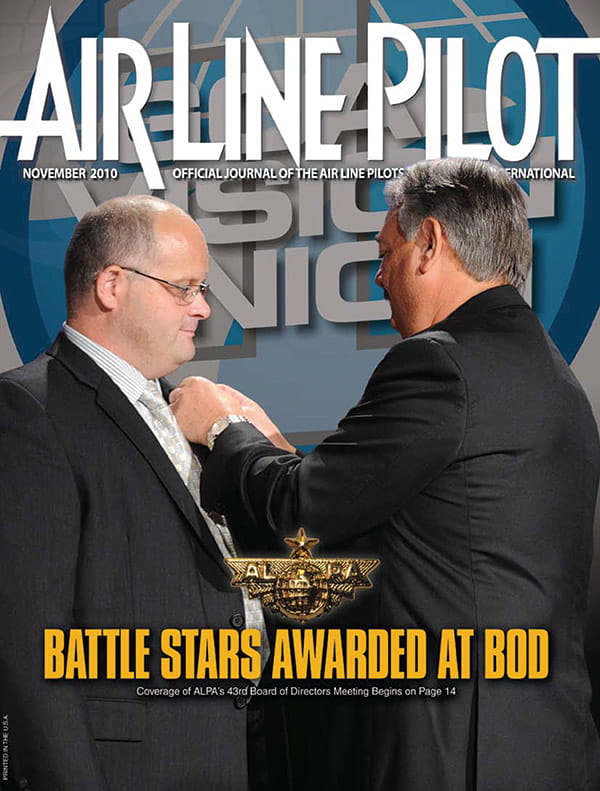
Wherever they go, Spirit pilots will still proudly wear the ALPA Battle Star strike pin for showing the industry what it means to be unified. When the rare opportunity arose to stand up and translate words into action, they responded by setting an example for every union aviator.
Capt. Scott Vallach, another former Spirit MEC chair, agreed that his colleagues were more than outstanding airline pilots.
“Spirit pilots leave behind a legacy of excellence, leadership, brotherhood, and dedication that’s unmatched in our industry,” Vallach observed. “They exemplified what it means to be an ALPA pilot. We’re a group of professional aviators, but more than that, we’re a family.
“As the book is closed on the Spirit pilot group, I believe more so than anything else, we’d like to be remembered as being that. Family. We’re Ned’s Kids.”
Capt. Ryan Muller, Spirit’s most recent MEC chair, saluted the pilot group’s incredible resilience and dedication, whatever the circumstances.
“Whether it was a strike, merger, bankruptcy, or airline shutdown. Spirit pilots always did more than what was asked of them in order to see the mission through,” said Muller. “I’ll always cherish my career at Spirit Airlines and the support we received from ALPA every step of the way. No matter what the challenge, we were never alone and always supported. That’s the power of ALPA and its impact on the piloting profession.”
Talk to a former Spirit pilot today and they’ll probably tell you it was the most fun they ever had flying. That spunky carrier born in Detroit may be gone, but it will always play an outsized role in the history of ALPA and aviation labor.

Featured Articles


