

Decades After 9/11 Attacks, Advocacy for Flight Deck Protections Continues
Enhancing Flight Deck Security
Twenty-five years after the terrorist attacks of September 11, 2001, commercial aviation remains one of the safest and most secure forms of transportation in the world. Much of that progress has been driven by the airline industry’s commitment to continuously strengthen the layers of protection that safeguard airline operations. Yet, recent incidents involving passenger attempts to gain unauthorized access to the flight deck serve as reminders that the work isn’t finished.
For decades, ALPA has advocated for improvements that reduce risks to flight crews and passengers. The Association has worked closely with government agencies, manufacturers, airlines, and industry partners to strengthen aviation security through practical, risk-based solutions. ALPA has participated extensively in FAA Aviation Rulemaking Committees (ARCs) and other advisory groups responsible for developing security recommendations. The implementation of secondary flight deck barriers has been an important focus of those efforts.
Secondary Barriers
“Twenty-five years after September 11, protecting the flight deck remains one of ALPA’s highest security priorities,” observes Capt. Jason Ambrosi, the union’s president. “Secondary flight deck barriers add another critical layer of defense, helping to ensure that pilots can safely perform their duties while protecting everyone on board.”
Following the attacks of September 11, reinforced flight deck doors became a cornerstone of aviation security. Hardened flight deck doors dramatically improved protection against unauthorized entry while remaining closed. But aviation security advocates recognized that a vulnerability still existed during the brief periods when the flight deck door was open for routine reasons, like crew changeouts and physiological breaks.
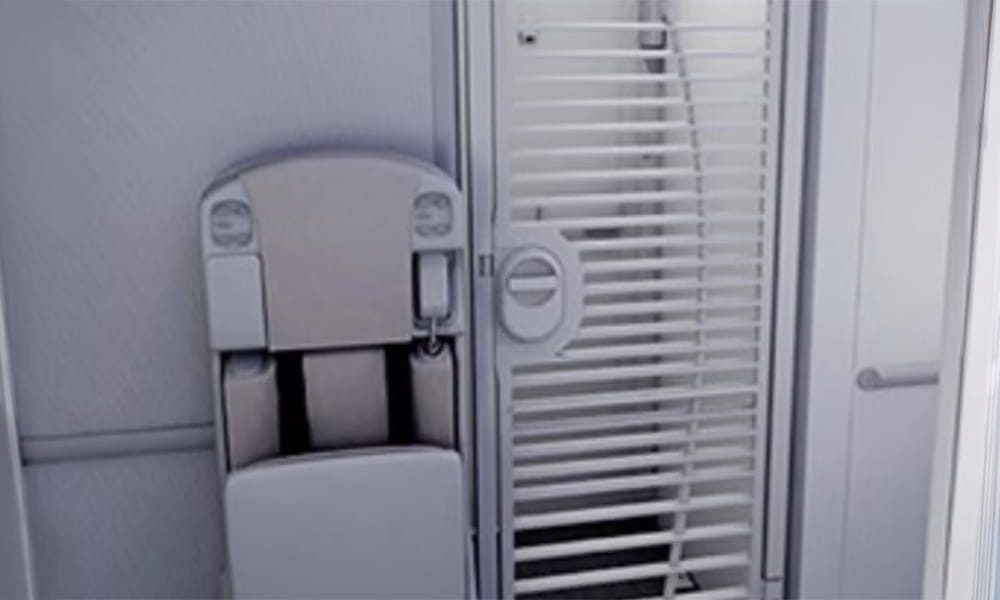
Secondary flight deck barriers were developed to address that vulnerability. Positioned between the flight deck door and the passenger cabin, these barriers create a temporary protective enclosure whenever the flight deck door is opened, making it significantly more difficult for an unauthorized individual to gain access to the flight deck.
Implementation Delays and Exemptions
After years of advocacy by the Association and other aviation stakeholders, federal regulations mandated the implementation of secondary flight deck barriers on all newly manufactured transport-category passenger aircraft delivered after August 25, 2025. With the requirement intended to go into effect last year, various airlines and aircraft manufacturers have continued to delay implementation. As a result, the FAA granted them additional time for certification and production, with some new compliance dates now going into 2027.
The FAA permitted tailored exemptions for certain aircraft while manufacturers completed certification work. Throughout the process, ALPA has continued to oppose such exemptions and argue that implementation should move forward as quickly as possible. Every newly delivered aircraft equipped with a secondary barrier represents another step toward strengthening aviation security.
Disruptive Behavior Remains a Challenge
Although the unprecedented spike in unruly passenger reports seen during the COVID-19 pandemic has subsided, disruptive behavior remains a persistent challenge. The FAA reports that unruly passenger incidents have declined significantly from the 2021 peak, yet the agency continues to investigate many cases each year, and incidents involving threats, assaults, or interference with crewmembers continue to require enforcement action. There were 1,621 unruly passenger reports in 2025; and as of this writing, 981 incidents have been reported so far in 2026.
Recent instances involving disruptive passengers underscore why additional layers of protection remain necessary. In May, United Flight 2005, operating from Chicago, Illinois, to Minneapolis, Minnesota, diverted to Madison, Wisconsin, after a passenger allegedly made multiple attempts to breach the flight deck before being restrained by law enforcement officers traveling on the aircraft.
Just days later, Frontier Flight 3345, operating from San Juan, Puerto Rico, to Chicago, diverted to Miami, Fla., after a passenger allegedly attempted to open both an emergency exit door and the flight deck door while also assaulting another passenger. Federal prosecutors later charged the individual with interfering with flightcrew members and related offenses.
And in late June, United Express Flight 3989, operating from Indianapolis, Indiana, to Houston, Texas, returned to its departure airport after a belligerent passenger allegedly attempted to open a cabin door shortly after takeoff. Other passengers helped restrain the individual before airport police removed the passenger following the aircraft’s safe landing.
Unacceptable Security Risk
Protecting the flight deck ensures that the flight crew can maintain control of the aircraft and safely complete the flight. Any effort to breach the flight deck presents an unacceptable security risk.
F/O Bryan Patchen (Delta), the Association’s Air Safety Organization Security Group chair, notes, “Secondary flight deck barriers provide an important layer of protection when the flight deck door is opened. Whether someone attempts to enter the flight deck because of disruptive behavior, a mental-health crisis, or malicious intent, there will always be a need to adequately protect the flight deck so that the crew can safely operate the aircraft.”
Documenting Security Events
Beyond advocating for physical security enhancements, ALPA also continues working to improve how aviation security events are documented. The Association has supported efforts to develop more standardized reporting and information-sharing practices for unruly passenger incidents and attempted flight deck breaches, recognizing that consistent reporting of incidents can help identify trends and strengthen future security measures. ALPA continues raising these issues in ongoing discussions with government and industry partners.
Next Steps: Retrofit Existing Aircraft
While the requirement for secondary flight deck barriers on newly manufactured airliners marks an important milestone, thousands of passenger airliners currently in service were delivered before the rule took effect. The Association has long supported extending these protections to aircraft that are already in service and advocated for legislation that would require those existing aircraft to be retrofitted with secondary barriers. ALPA strongly supported the language in the FAA Reauthorization Act of 2024 requiring the FAA administrator to establish an ARC to evaluate retrofitting currently operated aircraft with secondary barriers. The Association also served as a voting member within that FAA ARC and advocated for all Part 121 aircraft to be equipped with secondary barriers.
In addition to supporting secondary barriers for passenger airliners, ALPA continues to press for hardened flight deck doors on cargo aircraft, which in some cases don’t have any barrier to the flight deck.
“While the implementation of these protections on newly manufactured aircraft is an important step forward, it’s clear that our work on these security issues isn’t finished,” says Capt. Wendy Morse, the Association’s first vice president and national safety coordinator. “ALPA continues to advocate for extending these protections throughout the passenger fleet because every flight crew deserves the same level of security, regardless of the age or the type of the aircraft they fly.”
Flight Deck Barriers Are Critical for Security
Flight deck barriers protect airliners from security threats, yet gaps remain—passenger aircraft need secondary barriers, and cargo aircraft lack intrusion-resistant doors entirely.
25 Years Later, We Will Never Forget
The stories of ALPA pilots who lived through 9/11, those we lost, the days that followed, and our fight to secure the flight deck.
Featured Articles


