The ALERT Act is not enough. Tell Congress to adopt ROTOR Act provisions before ALERT becomes law!
Article


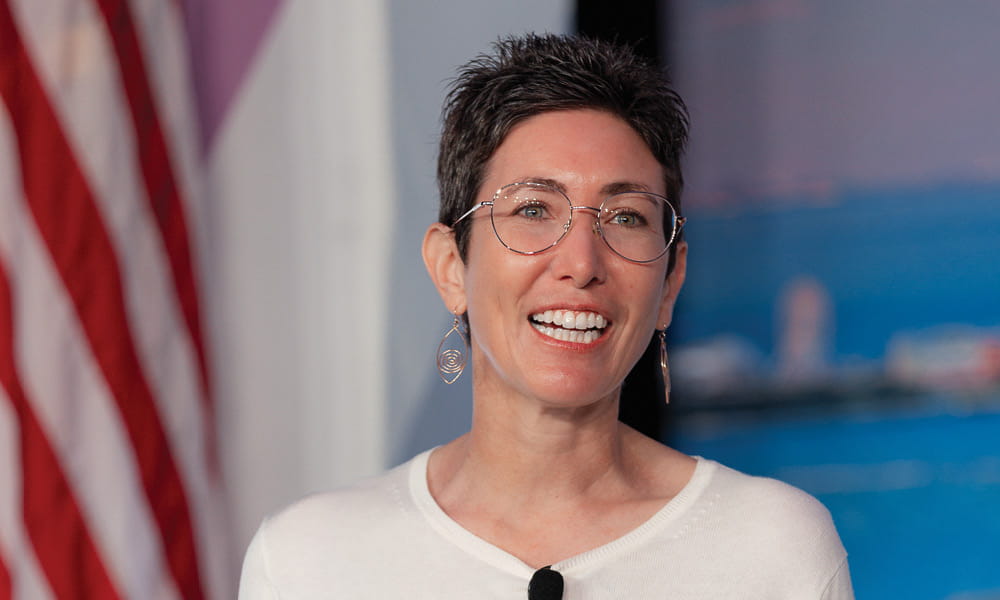
During a recent episode of Air Line Pilot Podcast, Capt. Jason Ambrosi, ALPA’s president, talked with Elan Head, senior editor of The Air Current. She brings a unique perspective, observing the trends, challenges, and transformations shaping the industry through the lens of someone who asks the tough questions and holds the industry accountable. Listen now on your favorite podcast platform or keep reading for an abbreviated excerpt.
Ambrosi: Today we’re flipping the script. Instead of defending our positions or explaining our perspectives, we want to understand how our industry looks from the press box. What stories are capturing attention? What emerging issues should we be paying closer attention to? And perhaps most notably, what trends are the media seeing that might not yet be on pilots’ radar? Elan, welcome to the podcast. How has your view of aviation changed since you started reporting on it?
Head: I started reporting on aviation essentially when I started learning how to fly. And I think like most new pilots, when I was learning how to fly, I was just so excited about everything. I was like a sponge, and I was just soaking up everything that I was exposed to in flight school and in the larger industry and not really examining that critically. But because I did start reporting about aviation fairly early on, I did have exposure to a lot of different people in the industry and a lot of different ideas. And I started to more critically examine the industry and how it worked. And especially so, as time went on, and as more of my friends started dying in airplane and helicopter crashes, that really led me to examine some of these assumptions that I had taken for granted earlier in my career. I started thinking more critically about how aviation works as a system. And so, in some ways, I feel like my reporting career has been systematically unpacking all of the myths I learned in flight school—especially when it comes to safety-related topics. And I think the biggest one of those is that it’s always up to pilots and it’s always the pilot’s fault.
I think that when you’re learning how to fly, there’s a rationale for taking that type of approach because, as pilot-in-command, you need to feel confident. You need to have the toolkit to be able to handle any situation that comes your way. But when you step back, there are a lot of things in the industry that pilots aren’t directly responsible for in terms of what type of safety equipment is on their aircraft when they get it. And so, as I started seeing the bigger picture, I think that really changed how I thought about aviation in general.
Ambrosi: Everybody likes to point the finger at the pilot right away, so I know my members will be happy to hear that there are people out there who say, “Hey, let’s wait a minute and look at all the facts that are involved.” Is that the biggest misconception the public has about our industry, or is there something else that you’d say the public has misconceived?
Head: I think that’s definitely part of it. I think this myth around pilots, and that focus on blaming the pilot, does bleed over into a lot of the mainstream media and mainstream reporting and into the public perception of pilots—just because that stereotype is so entrenched in the industry. So certainly, I think that’s a big misconception. I also think the general public just has no idea how incredibly complex the industry is, and there’s so much nuance to how the system functions and how it operates that you just have no idea about unless you’re really exposed to it constantly and study it. And also, the public doesn’t really understand the regulatory framework that allows for different types of operations as well, from Part 121, Part 135, or Part 91. So I think there’s a lot of confusion around that.
Ambrosi: I’ll say at ALPA, that’s been our mission: “Schedule with Safety.” We want the traveling public and the shipping public to feel like when they get on an airplane it’s safe. And they know it’s going to be safe because of the hard work the pilots do, that the regulators do. But that’s difficult work, behind the scenes, because they don’t know all the nuances and all the work that goes into keeping air travel the safest mode of transportation in the world.
Tell us about yourself and about your publication, The Air Current.
Head: I occupy a bit of a unique role because, even though I’m a journalist as my day job, I’m also a pilot and have worked professionally as a pilot in the past. I started my career as a newspaper reporter and freelance writer; and at some point, I got into travel writing and luxury travel writing, which was a nice gig. When I was on one of those assignments in British Columbia, I went for my first helicopter ride. I thought it was the most amazing thing I’d ever done, so I went home and signed up for lessons. I became a helicopter pilot and a flight instructor. That was my entry into aviation. And as I was learning to fly and beginning to work in the industry, like any good freelance writer, I was always looking for stories. That’s when I started writing about aviation, initially about helicopters specifically, and eventually fell into doing that again full time.
Search your favorite podcast platform for “Air Line Pilot Podcast” or visit our podcast page to listen to all the episodes.