


'Collaboration in Action: Aligning for What’s Next'
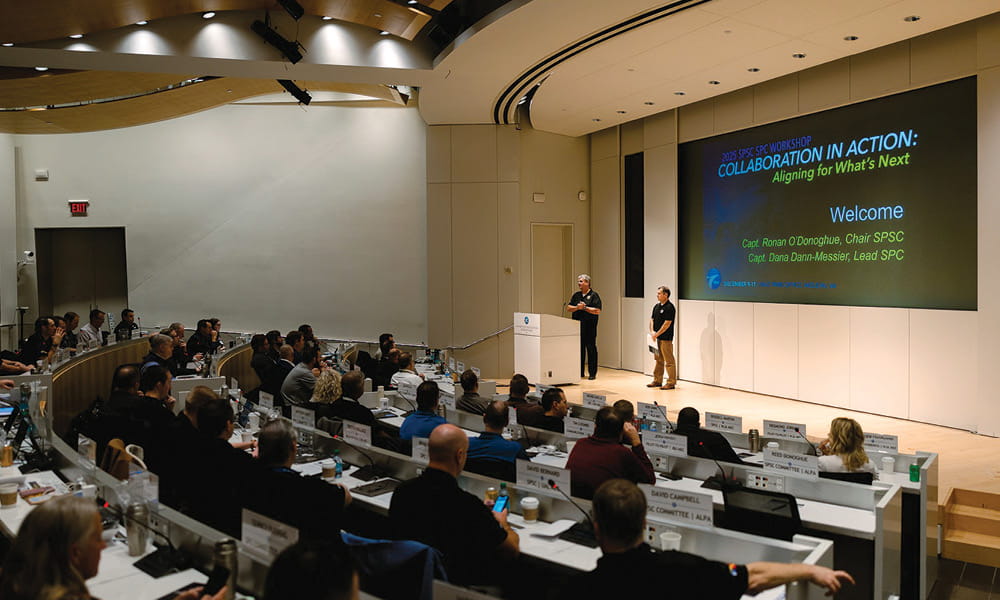
The Strategic Planning Committee (SPC) and Strategic Preparedness and Strike Committee (SPSC) held their biennial workshop at ALPA’s McLean, Va., offices on December 9–11, 2025. The theme of the workshop, “Collaboration in Action: Aligning for What’s Next,” set the tone for three days of meaningful discussion and shared learning. Volunteers from various ALPA pilot groups came together with a clear understanding: collaboration isn’t optional, it’s essential. Throughout the workshop, attendees exchanged lessons learned and reinforced the idea that strong planning, clear communication, and cooperation are the foundation of successful bargaining and lasting unity.
While addressing the group, Capt. Jason Ambrosi, ALPA’s president, spoke candidly about the critical role SPC and SPSC collaboration plays in achieving pilot group contracts. He emphasized that success isn’t achieved in isolation; it’s the result of sharing ideas, aligning strategies, and leveraging collective experience. He stressed that this collaborative model must continue to expand across all ALPA pilot groups and that all pilot groups benefit from pattern bargaining.
Capt. Ronan O’Donoghue (Alaska), the SPSC chair, and Capt. Dana Dann-Messier (Delta), the SPC lead, echoed Ambrosi’s message in welcoming attendees. They emphasized that the true value of the workshop lies in engaging with one another. Open conversations—about what’s worked, what’s failed, and what could be improved—create opportunities for meaningful learning. These exchanges foster innovation, help avoid repeated mistakes, and strengthen the effectiveness of pilot groups across the Association.
Collaboration was reinforced not only as a concept, but as a practice. ALPA’s SPC and SPSC committee members encouraged attendees to reach out, share challenges, and take advantage of the Association’s national resources early in the process. Multiple speakers highlighted that no single group is expected to have all the answers. ALPA’s strength lies in its collective experience, professional staff, and shared institutional knowledge.
Strategic planning discussions focused on the importance of having many clear, adaptable plans. Panelists emphasized the value of bringing in a “Go Team” early, establishing escalation and deescalation strategies, setting defined timelines, and building strong communication frameworks. “FACTS Teams” were repeatedly cited as best practice, providing accurate, transparent information without influence. This approach builds trust, reduces misinformation, and allows pilots to make informed decisions during critical moments. Relying on data, polling, and survey results was stressed as essential.
Unity emerged as a central theme throughout the workshop. O’Donoghue noted, “Unity is more than just a word—it’s engagement, participation, and ownership.” When pilots feel included through surveys, picketing, Family Awareness events, or peer-to-peer conversations, they’re more likely to support the process and take ownership of the final outcome. Dann-Messier expanded on this idea, sharing that buy-in gives pilots ownership in the plan and ultimately leads to successful execution.
Communication strategies were explored, with particular focus on generational differences and audience preferences. From traditional communication methods to social media engagement, speakers emphasized the importance of tailoring messages to meet pilots where they are. Interactive sessions reinforced that effective persuasion begins with listening, avoiding assumptions, and acknowledging concerns. An individual rarely changes their mind overnight, and credibility is built through openness and honesty, including acknowledging imperfections in agreements.
Several panels reinforced the importance of early education and internal messaging. Ensuring that pilots understand their current contract, the economic landscape, and bargaining realities helps prevent companies from controlling the narrative. Peer-to-peer outreach was highlighted as one of the most effective engagement tools, as pilots trust pilots. Face-to-face conversations—on layovers, at training centers, or during informal gatherings—provide invaluable insight into pilot sentiment and concerns.
The workshop also paused to honor the legacy of Capt. Christina Thomson, a former WestJet pilot and SPSC chair, whose impact continues to resonate across ALPA. Her brother, Capt. Ruarri Thomson (Air Canada), reflected on her dedication to the profession and spoke about the scholarship established in her name.
The workshop concluded with reflections on unity during challenging times, including furloughs and uncertainty. Panelists emphasized empathy, honesty, and precision in communication. While leaders can’t always change outcomes, they can provide clarity, support, and accurate information—helping pilots make informed decisions for themselves and their families.
The SPC/SPSC workshop reinforced that collaboration is the foundation for effective leadership. By sharing knowledge, planning strategically, communicating clearly, and supporting one another, pilot leaders are better equipped to navigate complex challenges and align their efforts for a stronger future in the next round of bargaining.

Featured Articles


