


Gaining Insight into ‘A Critical Component of a Pilot’s Contract’
ALPA’s Retirement and Insurance Seminar
Benefits—retirement, insurance, health care, and others—make up a key pillar of a collective bargaining agreement, and they’re growing in magnitude. Negotiating these benefits, implementing them, and supporting pilots as they use them are critical issues for every ALPA pilot group.
That’s why more than 50 pilot volunteers from 17 pilot groups joined staff and industry experts at the Association’s Retirement & Insurance (R&I) Seminar in ALPA’s McLean, Va., headquarters on April 22–23 to receive updates and learn about new ideas in the ever-important benefits world.
“Benefits are a critical component of a pilot’s contract,” said Capt. Wes Clapper, the union’s vice president–finance/treasurer. “Often, these benefits aren’t fully appreciated until they’re needed.”
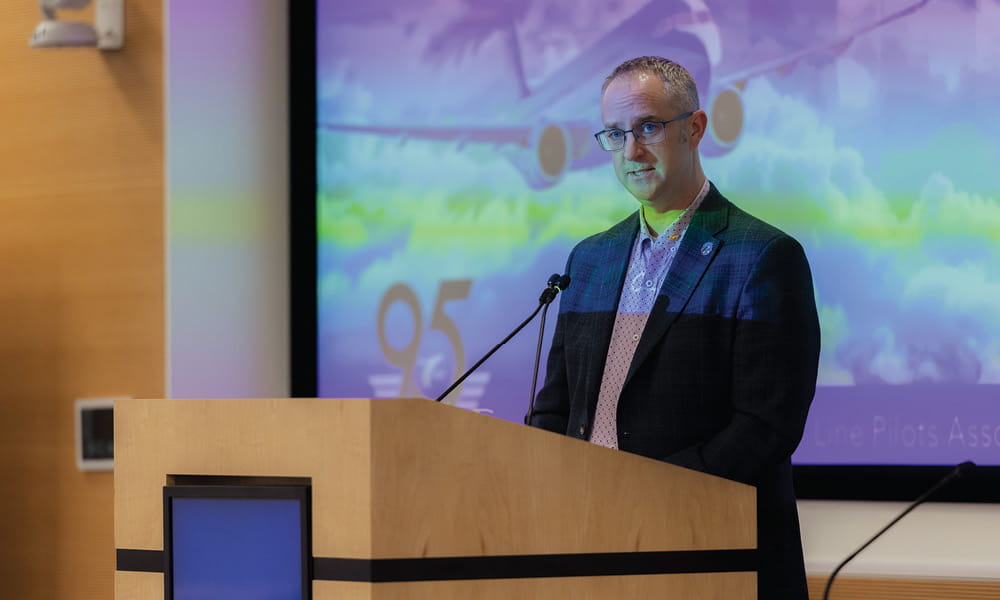
He highlighted recent innovations and improvements achieved by various ALPA pilot groups and encouraged collaboration so that these efforts can raise the bar for benefits Association-wide. “Pilot volunteers and staff working in R&I are always looking for innovative ways to improve benefits,” Clapper added.
Capt. Jon Erickson (Delta), the Association’s R&I Committee chair, stressed the importance of this networking, stating, “We work better together, and we achieve so much more when we collaborate.”
“Thirty years ago, there were five or six people on our R&I team,” observed Andrew Shostack, director of ALPA’s Representation Department. “There are 20 today,” and that growth highlights the increased significance of the subject matter, he said. Those staff members and many others were present at the seminar, both to lead presentations and to learn about the latest updates alongside pilots.
A Holistic View of Benefits
The seminar presented a holistic view of the benefits world, from health care and insurance to retirement savings and estate planning. Sessions focused on both opportunities to improve the benefit sections of a collective bargaining agreement and education to help pilot volunteers assist their members as they navigate the often-confusing world of benefits.
Multiple sessions centered on avenues available to plan and save for retirement. One reviewed the most common avenue, 401(k) plans, while others looked at more advanced options—such as market-based cash-balance plans, nonqualified deferred compensation plans, and group variable universal life plans—that some pilot groups are researching, negotiating, and implementing to allow for additional deferred compensation. These advanced options are becoming more and more indispensable for many pilot groups as they continue to look for tax-efficient benefit vehicles while negotiating increases in base pay.
Other sessions took a closer look at health care. Presenters shared an overview of transparency laws in pricing and the increasing use of artificial intelligence in health care, including efforts to reform or update the obligations of pharmacy benefit managers.
Experts also provided a benefits-focused legislative update at the federal level in a number of areas, including access to in-vitro fertilization, no overtime taxation, mental-health legislation, and the regulation of retirement plans, along with highlighting ALPA’s work at the state level to protect against carveouts in paid sick and family leave laws.
Attendees participated in an interactive panel featuring actual long-term disability cases involving ALPA pilot groups. The panelists and attendees discussed what happened, how the employer responded, and how to help their pilots work toward getting healthy and back to flying. The importance of eliminating ambiguity in these plans via the contract was stressed, with an emphasis on “bullet-proof language” to help get pilots through what’s often a very difficult time.
End-of-career needs were addressed as well, with a session on Social Security and Medicare tips for pilots approaching retirement as well as a review of estate planning and various options available for pilots to assist them in passing on more of their gains to their heirs.
Pilot Group Collaboration
Each session included time for questions, allowing participants to ask about current concerns within their pilot group. Plentiful networking opportunities with ALPA staff and R&I volunteers from other pilot groups allowed attendees to learn from the successes within the union.
“Collaboration and working together are tenets of this national officer team,” Clapper remarked, “and these events are crucial to that goal.”
Shostack reiterated that point in encouraging collaboration. “ALPA flourishes when we collaborate among our pilot groups,” he said.
The biennial seminar focused on U.S. retirement and benefits issues. Next year, the union’s R&I Committee and the R&I team will hold a similar forum in Canada, focusing on Canadian issues.

Featured Articles


