


LAST Training Prepares Pilots to Lead Safety Committees and Support Safety Programs
ASO Volunteers Learn to Integrate Data, Manage Risk, and Strengthen Safety Culture
ALPA hosted its Leadership and Advanced Safety Training (LAST) Course in McLean, Virginia, on March 24–27, bringing together 16 pilots from nine pilot groups for four days of intensive, scenario-based training. The curriculum prepares pilot volunteers to connect information, identify risks, and act decisively to maintain aviation safety in an operational environment increasingly defined by complexity, expanding data streams, and constant change.
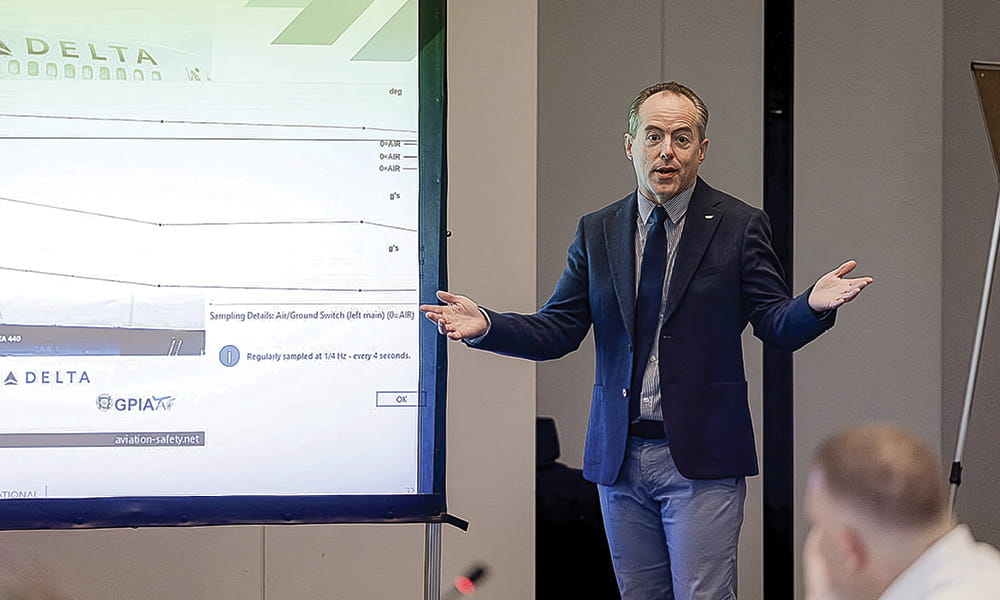
An advanced course within the union’s Air Safety Organization (ASO) safety training continuum, LAST builds on the foundations established in Foundational ALPA Service Training and Initial Safety Training. While those courses introduce safety concepts and tools, LAST focuses on application, preparing pilots to assume leadership roles within their safety structure, and to advocate effectively on behalf of the Association’s safety priorities.
“This course is really the culmination of the safety work you’re already doing,” said Capt. Wendy Morse (United), ALPA’s first vice president and national safety coordinator. “It builds on that experience and gives you additional tools to be more effective in your roles.”
Airline safety is built, in part, on a network of voluntary reporting and data collection programs that make up an airline’s Safety Management Systems (SMS). The Aviation Safety Action Program (ASAP), Flight Operational Quality Assurance (FOQA), and Line Operations Safety Assessments (LOSA) all provide valuable insight into operational risk. But data alone doesn’t improve safety. LAST is about developing the ability to see and act on the full safety picture, turning data into safety intelligence.
“Data-driven decision-making is the foundation for building a safer aviation system,” remarked Morse, “and it begins with the programs you work with every day: ASAP, FOQA, LOSA, and Fatigue Risk Management Systems.”
Capt. James Norman (Delta), the LAST course director, led sessions on the “big picture” of safety, safety culture, and the structure of SMS. He emphasized that safety isn’t the result of any single program, but of how those programs function together.
“We’re going to talk extensively about system safety and what SMS really means,” Norman commented. “By the end of the day, you’ll understand how safety should work as a system.”
An FAA SMS briefing by Mike Schwartz of the FAA’s Safety Management Branch, along with discussions of regulatory frameworks and industry standards, helped participants understand how airline safety programs operate within a broader system, and how pilot volunteers contribute to that system.
Attendees engaged in Safety Risk Assessment workshops and scenario-based learning, evaluating operational hazards, assessing risk levels, and developing mitigation strategies, as well as follow-up monitoring. Working in groups, they simulated the processes used by ALPA, airlines, and regulators to manage safety risks in real-world operations.
“When you leave here,” said Norman, “you’re going to have the skills you need to go back to your airline and help run a safety risk assessment on a real operational issue.”
Capt. Steve Taglia (Delta), along with Norman and Liz Roussel, an ALPA Engineering & Air Safety Department staff member, led in-depth sessions on FOQA and flight data monitoring. Participants explored how flight data is collected and analyzed to identify safety trends, with discussions covering crew contacts, aggregate versus single-event analysis, and emerging issues such as personalized FOQA.
Capt. Paul Soporowski (United), Capt. Kurt Schlesinger (United), and Roussel led sessions on the principles of ASAP, followed by a briefing from Bill Plessinger of the FAA’s ASAP office. Attendees then applied these concepts in mock Event Review Committee sessions, working through realistic scenarios and decision-making processes. These exercises highlighted critical concepts essential for effective voluntary reporting systems: the importance of consistency, fairness, and a just culture.
Human factors and cognitive bias in ASAP analysis were also addressed, as well as emerging analytical tools. In a presentation on deep learning in ASAP analysis, Eddy Joseph, senior manager of Data Analytics at United Airlines, introduced participants to advanced techniques for identifying patterns within large datasets, moving beyond traditional keyword-based approaches.
Instructors also demonstrated how information from ASAP and FOQA can be combined through “crosstalk” to provide a more complete picture of operational risk. By examining how these data streams intersect, attendees learned to identify trends that might not be visible within a single program.
Safety programs are most effective when they’re integrated into a unified system, supported by collaboration across the industry. This idea was reinforced in a broader discussion of Aviation Safety Information Analysis and Sharing and big data led by Kyle Quakenbush, a principal aviation systems engineer at MITRE, and Crystal Fallin, an operational safety analyst with the FAA. These sessions highlighted how industrywide data sharing contributes to system-level safety improvements.
“Engagement with industry and government partners is critical to the safety work we do at ALPA,” said Morse. “Those relationships are essential to improving safety across the system.”
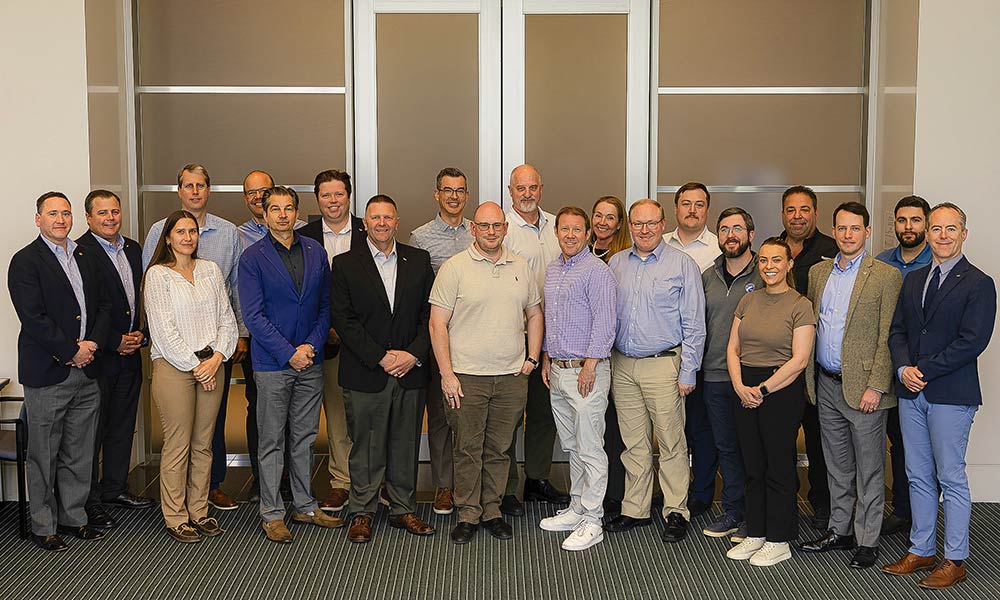
LAST also emphasizes the importance of strong leadership skills. Safety representatives must operate in complex environments involving multiple stakeholders, including airline management, regulators, and fellow pilots. They must communicate clearly, advocate effectively, and make decisions grounded in both data and operational reality.
“Leading a volunteer group is one of the toughest jobs in any organization,” said Capt. Steve Jangelis (Delta), the union’s ASO Aviation Safety Group chair. “You have to bring people along, and that takes real leadership.”
Jangelis also underscored the importance of disciplined, fact-based advocacy. “Deal with facts. Don’t deal with emotions. If you come in with numbers and hard facts, you can make your case and drive change.”
Sessions on ALPA structure and administration introduced participants to the union’s safety policies, organizational framework, and strategic priorities. Topics included working with management, contract considerations, and the role of Central Air Safety Committee (CASC) chairs.
Capt. Brian Moynihan (Alaska) shared insights from his experience serving as a CASC chair for his pilot group, emphasizing credibility, persistence, and collaboration in advancing safety initiatives.
Sarah Gisriel, an Association media specialist, provided guidance on how to convey safety messages effectively, an essential skill for pilot safety volunteers who often need to translate technical information into actionable safety recommendations.
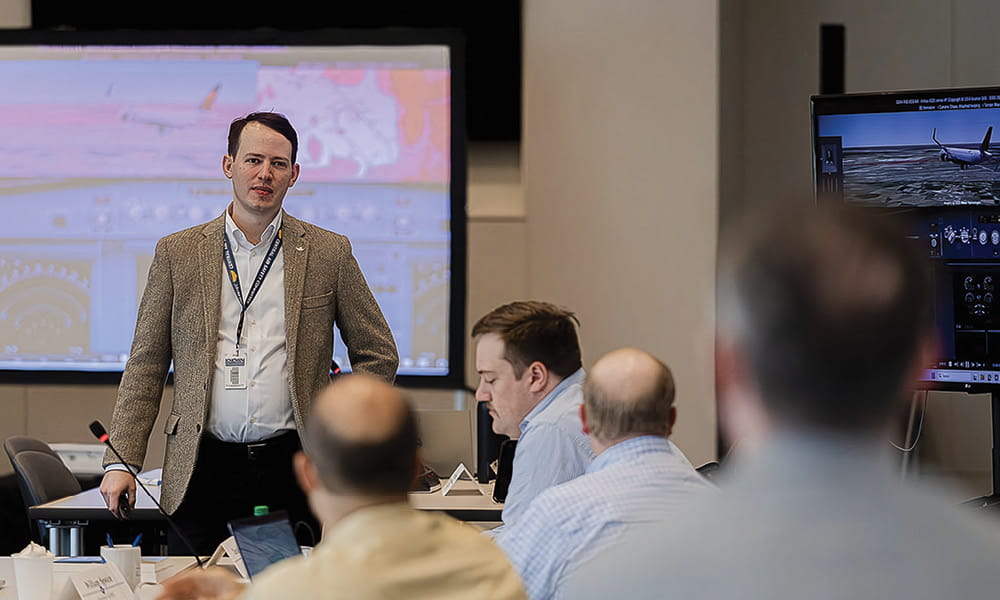
Throughout the course, attendees were reminded that their work is part of a long tradition of pilot-led safety improvements, dating back to ALPA’s earliest days. From fatigue and “pilot pushing” to development of a standardized instrument layout, and advocating for an independent accident investigative body, the Association has always been on the front line of aviation safety.
“We have a long lineage of dedication to safety, of doing the right thing when nobody’s looking, and speaking up when something isn’t safe,” Norman observed.
As the airline industry continues to evolve and the environment in which pilots operate becomes increasingly more complex, that commitment and the leadership it requires remain as important as ever.
“If we don’t do this work, who will?” asked Jangelis. “You’ve stepped up, and our members thank you for continuing to advocate for safety.”
ALPA Members: Explore Training Opportunities
ALPA regularly offers LAST training to expand its pool of pilot safety leaders across the union. The next course is scheduled for October 20–23 in Scottsdale, Arizona. In addition to LAST, ALPA provides comprehensive year-round training courses to help pilots and aviation professionals stay ahead in safety practices and regulatory standards.

Featured Articles


