


Paying It Forward: United Pilot Mentors as OBAP Leader
It’s been said that mentorship does not mean creating that person in your own image but, rather, giving them the means and encouragement to create themselves—a belief that F/O Tennesse Garvey (United) firmly shares. As a young child living in Kingston, Jamaica, the future B-777 pilot had little exposure to air transportation beyond watching airplanes land and takeoff from a local airport.
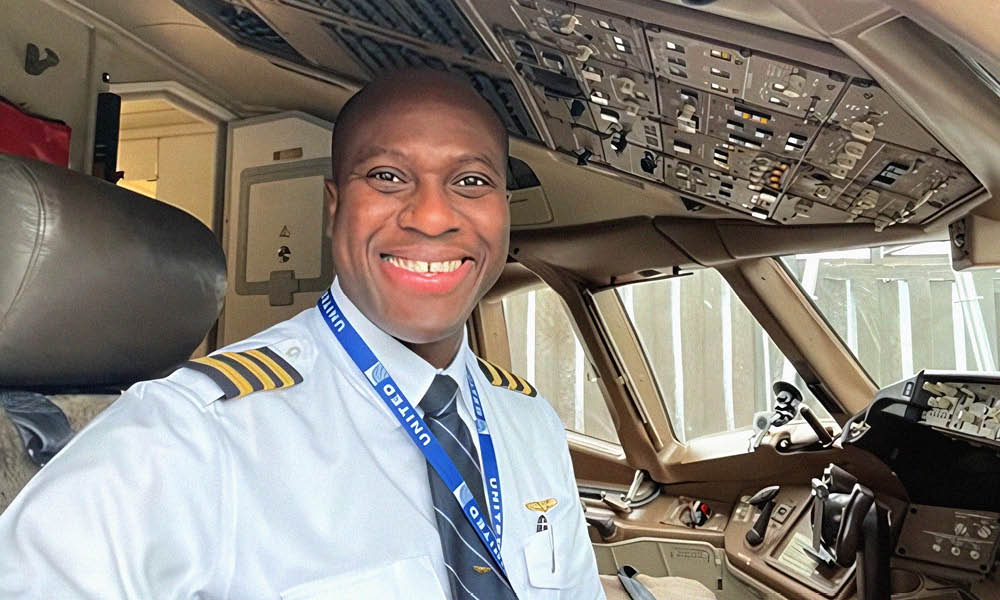
“Growing up, I didn’t know any pilots,” Garvey shared. “No one was coming to my school to talk about aviation.” However, he attributed much of the success he’s achieved to the encouragement and guidance he received from his parents. “I wouldn’t be here today if they didn’t believe in me,” he asserted, adding that his mother and father recognized his early fascination with flying and fostered it, but many others aren’t so fortunate.
Wanting to make a difference, Garvey works with the Organization of Black Aerospace Professionals (OBAP) and chairs its Board of Directors. An avid advocate for volunteerism and mentorship, he noted that OBAP works to help underrepresented minorities pursue and land aerospace jobs. Through the organization’s many resources and opportunities, these individuals are exposed to all kinds of career choices as well as information about the means to attain them.
Taking Flight
Beyond observing the traffic at Kingston’s Norman Manley International Airport, Garvey’s first real exposure to flying was attending a summer flight camp while in high school. One of 15 participants, Garvey learned about avionics, other aircraft systems, and what it took to become an airline pilot. However, a bumpy discovery flight in a Cessna 150 temporarily deterred the young aviator. But with his parents’ encouragement, he took a second flight and had a great experience.
Garvey attended Embry-Riddle Aeronautical University in Daytona Beach, Fla., where he graduated debt-free in 2008. He paid for his schooling by working a series of jobs in college, including as a customer service agent for US Airways at Daytona Beach International Airport.
After graduation, Garvey worked at Florida Institute of Technology, eventually rising to the rank of assistant chief flight instructor for the school’s College of Aeronautics. After brief periods flying for ExpressJet and JetBlue, he was hired by United Airlines in 2019.
While flying as an ExpressJet pilot, Garvey and a first officer had a discussion about the importance of volunteering. She asked if he had participated in any of the OBAP outreach programs. Garvey had never heard of the organization; but based on her recommendation, he joined OBAP in 2013 and has been an active member ever since.
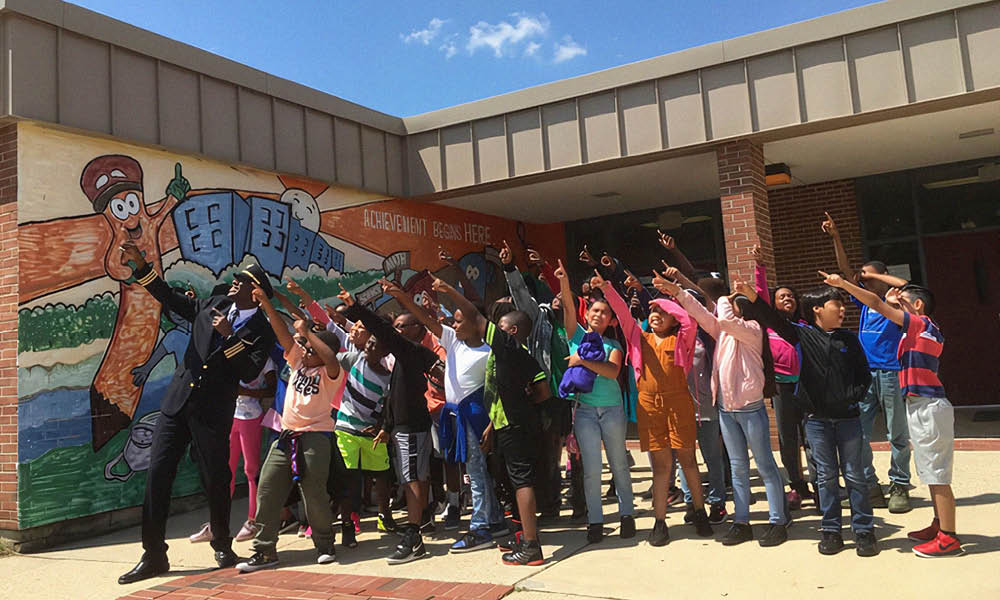
Garvey enjoys his senior leadership role, but what he likes most about his duties is working with youth groups. He currently serves as director of OBAP’s Denver ACE (Aerospace Career Education) Academy, one of 46 weeklong programs OBAP will be offering this summer. Students of the Denver ACE Academy will participate in introductory aviation and leadership training. They’ll also take orientation flights in either a Cessna or Piper aircraft and visit United’s Training Center where they will fly one of the airline’s full-motion flight simulators.
In addition, Garvey works with OBAP’s Aerospace Professionals in Schools program, coordinating STEM events, job fairs, and other activities for those interested. “I tell students all the time, ‘You don’t have to be an island. You don’t have to do this alone. There are people who want to help,’” he commented.
A New Opportunity
According to OBAP, “In 1976 Ben Thomas, a young African American pilot with Eastern Airlines, spearheaded an effort to form a permanent body to address discrimination in the airline industry. He invited 37 African American pilots, representing nearly 50% of the industry total at the time, to convene at O’Hare Hilton Hotel in Chicago, Ill., on September 17 and 18.” Originally called the Organization of Black Airline Pilots, OBAP was established.
“Having access to a support structure can be the difference between getting an airline job and never even considering one,” Garvey observed. “Through OBAP, I want to be a resource and, in some way, communicate that if I can succeed in this industry, so can you.”
Share Your Journey
Do you know an ALPA pilot with a story to share or have a remarkable tale of your own? We're looking for future features in Our Stories.

Featured Articles


