


Pilots Helping Pilots Navigate Life’s Challenges
Pilot Volunteers Train to Support Fellow Pilots
Inside a classroom at the Alaska Airlines Global Training Center in Tukwila, Washington, pilots from across the Association were practicing something that sounds extremely simple but can be surprisingly difficult: listening.
Working in groups of three, participants rotated through the roles of pilot peer, caller, and observer. One pilot portrayed a colleague confronting a difficult personal or professional situation. Another practiced listening without judgment, recognizing emotions, asking questions, and helping the caller identify a path forward. The third watched and evaluated the interaction.
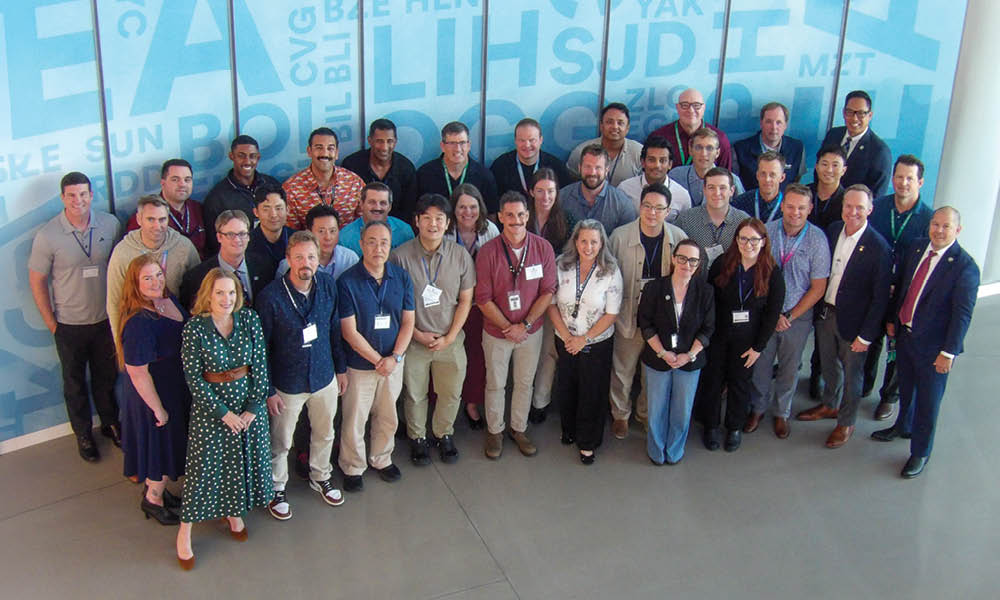
The exercises were part of ALPA’s recent Air Safety Organization (ASO) Pilot Peer Support (PPS) initial and recurrent training, which took place August 24–28 just outside of Seattle, Wash. Sixty-five participants representing 20 pilot groups attended the courses, which prepare the Association’s Pilot Assistance Group volunteers to provide confidential, peer-based support to fellow pilots facing personal and professional challenges.
The scenarios may have been simulated, but they represent situations that PPS volunteers frequently encounter in their work. Pilots reach out for help with relationship difficulties, grief, financial pressures, medical concerns, anxiety, career uncertainty, and other challenges. Sometimes what they need most isn’t someone with an answer, but another pilot who’s simply willing to listen.
Pilot Peer Support Beginnings
ALPA established its Association-wide Pilot Peer Support program in 2018, as the airline industry was paying increasing attention to pilot mental health and the barriers that can discourage pilots from seeking assistance. Those concerns received worldwide attention following the 2015 Germanwings Flight 9525 tragedy. Over the years, the aviation community has increasingly recognized the value of providing pilots with confidential avenues for seeking help before difficulties become crises.

F/O Carrie Braun (JetBlue), the PPS Group chair, has been involved with the union-wide PPS program almost from its beginning. Her motivation, however, predates the program. After confronting significant challenges earlier in life, she received assistance from a nonprofit organization that helped her overcome some of her personal struggles. A friend later suggested that her ability to connect with people might make her a good peer-support volunteer.
“I didn’t even know what PPS was,” acknowledged Braun. But when she learned that the objective was helping pilots recognize that they didn’t have to struggle alone, her response was simple: “Sign me up.”
Today, she considers combating misinformation and stigma surrounding mental health to be an important part of that mission.
“We always want to offer hope,” Braun observed. “So that’s what we train our peers to do. We want the people who reach out to us to see that there’s a process. There’s a pathway. And we can help them through it.”
That message resonates with other PPS instructors who teach alongside her during the training sessions—many of whom also faced their own challenges before becoming volunteers.
Helping Others
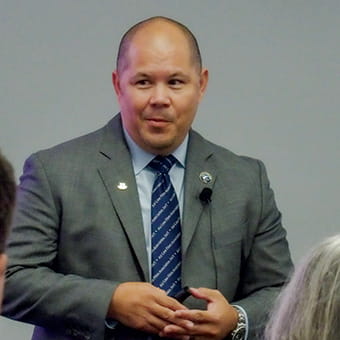
“I don’t want other people to have to go through something like that and not have some kind of pathway out,” Sanchez said. “That’s what keeps me motivated to do this work.”
Capt. Elijah Nicolas (JetBlue), the PPS Group vice chair, likewise found that experiences in his own life had taught him resilience, and Nicolas realized that he was often the friend others turned to when they needed to talk. Being there for fellow pilots was something he felt he could do that made a difference.
“We’ve got the best of the best doing this work,” Nicolas remarked. “They’re just people who want to help and be of service. And they know that whatever resiliency they’ve developed through their own challenges might help someone who may really need it.”
Initial PPS training gives volunteers the tools to turn that desire to help into effective peer support. Participants learn to listen nonjudgmentally, offer hope and encouragement, and provide access to resources and information. Training addresses subjects ranging from call handling, stress, anxiety, grief, and mental health to medical certification issues, suicide awareness, and escalation procedures when a peer believes it’s warranted. But much of the course returns to one fundamental skill: listening.
Capt. April Abenza (JetBlue) led participants through various communication and rapport-building techniques, including paraphrasing, summarizing, mirroring, reflecting emotions, and affirmation. One acronym she uses to remind herself to listen is WAIT: “Why am I talking?”
The objective isn’t for the peer volunteer to diagnose the caller or solve every problem. It’s to establish a connection, understand what the pilot is experiencing, provide reassurance, assess whether additional assistance is necessary, and help that pilot identify appropriate resources.
Abenza understands the importance of that pathway firsthand. After experiencing postpartum depression, she sought treatment and subsequently spent three years navigating the process of regaining her FAA medical certificate.
“The only way that I can make that experience not feel worthless,” she said of the emotional toll and financial impact it had on her, “is to try to make sure that it doesn’t happen to another pilot. Hopefully, my experience can help someone else.”
F/O Adam Taylor (Sun Country) encountered his own aeromedical challenges after spending approximately 15 years in public service as a paramedic, firefighter, and 911 dispatcher before pursuing a longtime ambition of becoming an airline pilot. But the medical certification process nearly became a barrier to that career after the repeated trauma he suffered in his previous work.
“What may seem like a dead end is really just the beginning,” Taylor observed. His experience now motivates him to help other pilots who are confronting difficulties to understand that asking for help doesn’t necessarily mean abandoning their careers.
Providing Effective Support
Alaska Airlines system chief pilot Capt. Scott Day stopped by to welcome attendees of the initial course and describe the value the PPS program provides to his airline. Alaska Seattle base chief pilots Capt. Kat Pullis and Capt. Chuck Metzgar also dropped in to talk with participants to share their experiences with the program.
With nearly 5,000 pilots and comparatively few pilot managers, Day said Alaska relies on ALPA volunteers and the union’s assistance programs to expand the network available to pilots who need help.
“We have 4,700 pilots, but that’s really 4,700 families we have to take care of,” said Day. “And helping a pilot through a difficult period can have effects that extend far beyond the immediate problem.”
The PPS program is a cornerstone of the Alaska Master Executive Council’s (MEC) commitment to supporting pilots and their families. MEC officers Capt. Scott Rubin, vice chair; Capt. Daniel Richards, treasurer; Capt. Will Swoveland, secretary; and F/O Chandler Blair-Zinger, executive administrator, attended both training events to welcome participants and personally thank the volunteers for their dedication to their fellow pilots. The MEC also hosted a group dinner to recognize the volunteers and the important role they play in supporting ALPA members.
For experienced volunteers attending recurrent training, the course addressed another important question: What happens to the people who repeatedly listen to others’ most difficult experiences? Mental-health professional James Boomhower joined participants virtually for a session examining residual and vicarious trauma, compassion fatigue, burnout, and self-care.
“The same things that make you amazing peer supporters can also put you at risk to be affected by the support that you provide,” Boomhower commented.
Peer volunteers bring their own experiences to every conversation, he explained. Those experiences can help them empathize with another pilot, but volunteers must also recognize when their own emotions or experiences begin interfering with their ability to provide effective support.
That lesson reinforces why recurrent training is required for volunteers who remain active in the Association’s PPS program. Experienced peers return at least once every 24 months to reinforce listening and critical-thinking skills, examine current trends and best practices, and learn how to continue supporting others without neglecting their own well-being.
PPS volunteers come from different pilot groups and backgrounds and arrive at peer support through experiences that may be very different. What unites them is an understanding that even highly trained professionals sometimes need someone beside them to help them walk a difficult path.
“Seeking that support isn’t a sign of weakness,” noted Braun. “It’s recognition of something pilots already understand intuitively. We don’t handle issues on the flight deck alone. Why would we try to handle them alone in our personal lives?”
Pilot Peer Support Program
Specially trained pilot volunteers are here to help you deal with stress from any source. Learn more and connect with a peer today.

Featured Articles


