


Examining Safety, Security, and Operational Challenges in the Air Cargo Sector
Pilots Meet in Orlando for ALPA’s 2026 Cargo Symposium
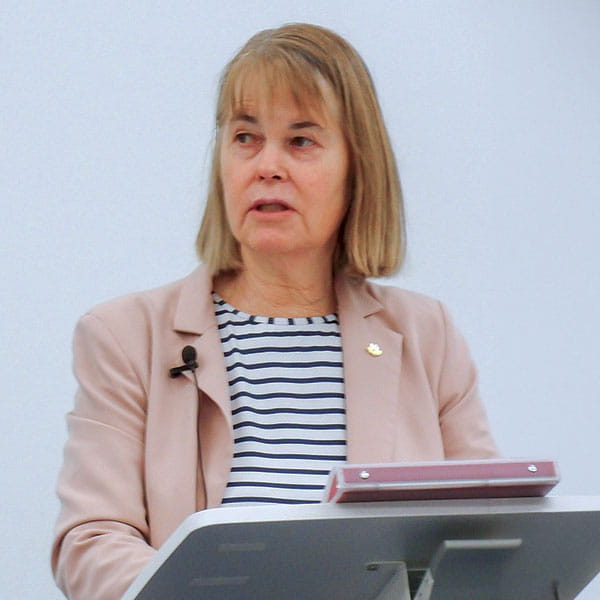
Cargo pilots from across the United States and Canada convened in Orlando, Fla., February 24–26 for ALPA’s 2026 Cargo Symposium. The three-day meeting brought together 59 representatives from pilot groups and other stakeholder organizations to examine issues facing the air cargo sector and share strategies for strengthening safety and security.
Pilot groups represented included FedEx Express, Cargojet, Kalitta Air, Western Global, Delta, JetBlue, Hawaiian, Atlas Air, and UPS. Attendees from government agencies and industry organizations included the FAA, the Pipeline and Hazardous Materials Safety Administration (PHMSA), the National Transportation Safety Board (NTSB), the International Civil Aviation Organization, the Cargo Airline Association, the Independent Pilots Association (IPA), Teamsters Local 2750, Boeing, Underwriters Laboratories (UL), ENSCO, and a retired Drug Enforcement Administration (DEA) agent.
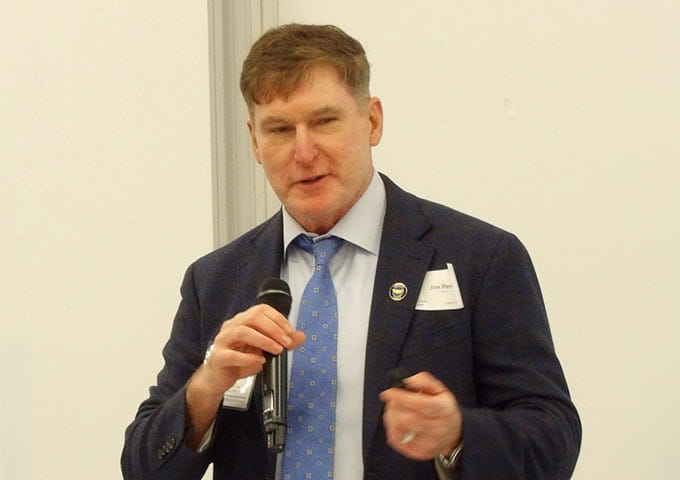
Capt. Wendy Morse, ALPA’s first vice president and national safety coordinator, opened the symposium, emphasizing the importance of collaboration among labor, regulators, and industry stakeholders to address the complex safety and security challenges facing cargo pilots today.
“One of the things that has become increasingly clear over the last several years, especially through gatherings like this, is that there really is no such thing as ‘just’ a cargo pilot anymore,” said Morse. “Whether you fly all-cargo operations or carry freight in the belly of a passenger aircraft, every pilot is a cargo pilot in some form. And that means what we discuss here the next three days has ramifications well beyond the cargo sector. The issues and risks we identify and the standards we fight for will ultimately affect the entire industry. That reality is why ALPA continues to push so hard for one level of safety and security for all airline pilots.”
F/O Jim Perry (FedEx Express), the Association’s Cargo Committee chair, helped guide discussions throughout the symposium and underscored the importance of maintaining close coordination among cargo pilot groups as the industry continues to evolve. F/O Aaron Kennington (FedEx Express) served as emcee during the three days of presentations and discussion.
Reduced-Crew Operations
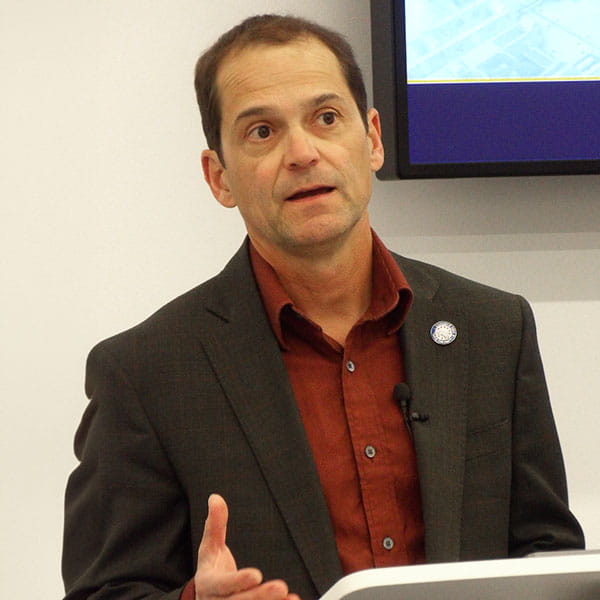
Capt. Jason Ambrosi, ALPA’s president, addressed the symposium and later moderated a panel discussion examining the safety implications of reduced-crew operations (RCO), a concept that continues to raise serious concerns among pilots worldwide.
“Attempts to reduce the number of pilots on the flight deck is one of the greatest threats facing the safety of all airline operations,” Ambrosi stated. “As aviators, we know that it takes at least two pilots to safely operate flights both under normal operations and during emergencies. It’s because of the safety benefit of at least two brains, two sets of eyes, two pairs of hands, and the experience of two pilots that the Association fiercely opposes schemes proposed by some to operate certain phases of flight with only one pilot.”
Proposals to reduce the number of pilots on the flight deck rely heavily on automation and new operational concepts, but many aviation safety experts argue that removing one of the two pilots would weaken the safety margins that have helped make aviation the safest form of transportation.
“Having at least two qualified pilots on the flight deck has always served as one of the most important safeguards in aviation,” said Ambrosi. “Weakening that standard would introduce unnecessary risk into a system that already operates in a demanding and complex environment.”
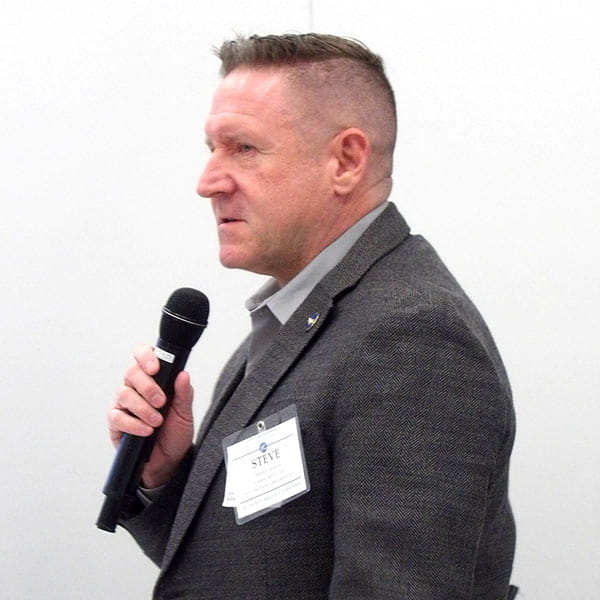
Capt. Steve Jangelis (Delta), the union’s Air Safety Organization (ASO) Aviation Safety Group chair, joined Ambrosi on the panel along with Richard Johnson, chief pilot of Boeing’s 787 program. Panelists discussed the technological and regulatory developments surrounding RCO proposals and the importance of maintaining strong safety standards as the industry evaluates potential changes to flight deck operations.
During that discussion, Johnson talked about advancements that led to extended-range twin-engine operational performance standards. “We’ve shown data to be able to go forward from three engines to two engines,” he remarked. “But nobody’s talking about one engine because everybody in this room can show examples of why one engine isn’t a good idea. Similarly, some folks are discussing extended periods with one pilot or zero pilots. But lots of us know that there are worst-case scenarios that aren’t safe.”
Johnson also indicated that there are potentially new hazards associated with quickly advancing technologies that could find their way onto the flight deck, such as artificial intelligence and machine learning. “We can be innovative, but we have to be very, very mindful, and we have to use data,” he said.
Cargo Industry Economic Outlook
Attendees also received briefings on the cargo industry’s economic outlook. Guillermo Ochovo, consulting director with Cargo Facts, joined the symposium virtually to discuss global cargo market trends, while Paul Karg, manager of bargaining analysis in the Association’s Economic & Financial Analysis Department, provided a labor-focused assessment of the financial health of major cargo operators.
Risks Cargo Pilots Face
A panel discussion moderated by Capt. Rich Hughey (FedEx Express), a member of ALPA’s Cargo Committee, explored broader threats facing cargo pilots. Panelists included Dave Semanchik, a senior managing attorney in union’s Legal Department; Capt. Dave Cameron (Atlas Air); Capt. Ian Munro (Cargojet), his pilot group’s Central Air Safety chair; Capt. Bill Cason (UPS), representing the IPA; and Capt. Jose Nieves (FedEx Express), his pilot group’s Master Executive Council chair. Panelists discussed challenges affecting cargo operations, including evolving regulatory environments, competitive pressures within the global cargo market, and operational practices that could undermine safety standards if not carefully addressed.
Hazardous Materials
Hazardous materials, especially the risks associated with transporting lithium batteries, were also a major focus of the symposium. Shane Kelley, acting director of the International Program in PHMSA’s Office of Hazardous Materials Safety, delivered a keynote address outlining the agency’s role in overseeing the safe transport of hazardous materials.
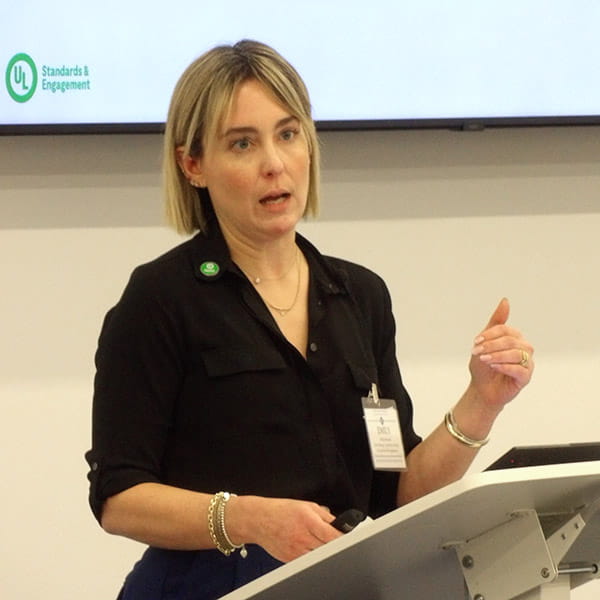
Additional discussion came from representatives of UL Standards & Engagement, who provided an update on the Thermal Runaway Incident Program. Bob McLelland and Emily Brimsek described how the program gathers data about lithium battery incidents in transportation to improve safety standards and better understand the circumstances that can lead to thermal-runaway events.
International regulators are also studying the issue closely. Lía Calleja Bárcena of the European Union Aviation Safety Agency joined virtually to discuss the LOKI-PED (Lithium Batteries in Portable Electronic Devices) research project. The endeavor is focused on the risks associated with lithium batteries in portable electronic devices when fire and smoke develop on the flight deck and/or cabin and understanding how mitigation strategies can be improved.
Robert Clatterbuck, branch chief for NTSB hazardous materials investigations, outlined the agency’s approach to investigating accidents and incidents involving dangerous goods. Lessons learned from these investigations help regulators and industry stakeholders identify emerging hazards and strengthen safety recommendations aimed at preventing future incidents.
Security
Security threats were another important topic during the symposium. Capt. Bill Schild (FedEx Express), the Association’s ASO Aviation Security Group cargo operations expert and ALPA’s Cargo Committee vice chair, joined retired DEA Special Agent Norm Tobias to discuss evolving security risks affecting cargo flights. Their briefing examined issues including the role of law enforcement in combating illicit trafficking networks that rely on commercial air transport.
Unmanned Aerial Systems
In addition, participants were briefed on the emerging threats posed by unmanned aerial systems (UAS). Col. Bill Edwards (U.S. Army, Ret.), director of counter-UAS programs at ENSCO, described how the rapid growth of drone technology has introduced new risks to aviation operations worldwide. He discussed strategies currently being explored to detect and mitigate unauthorized drone activity near airports and other critical aviation infrastructure.
Fatigue
Fatigue risk management was another subject addressed during the symposium. Capt. Rob Bassett (FedEx Express), his pilot group’s Fatigue Risk Management Committee chair, and Capt. David Boehm (Atlas Air), IPA Local 2750 Safety and Aviation Safety Action Program chair, led a discussion examining Fatigue Risk Management Systems. Cargo pilots often operate during overnight hours or across multiple time zones, making effective fatigue-mitigation strategies an essential component of maintaining operational safety.
Commercial Aviation Safety Team
Attendees also received an update on the Commercial Aviation Safety Team (CAST), a government-industry partnership that works to identify safety risks and implement strategies to reduce the likelihood of accidents. The briefing was presented by Hughey and Crystal Fallin, the FAA’s CAST cargo team lead.
Confidence in Collaboration
“The issues we’ve discussed aren’t easy,” said Morse in her symposium closing remarks. “They’re complex, interconnected, and in many cases global in scope. But what gives me confidence is the level of engagement and collaboration we’ve witnessed here. The challenges facing cargo pilots are real, and in many cases growing. But so is our collective ability to identify risk, advocate for meaningful change, and uphold one level of safety and security for all airline pilots.”

Featured Articles


