


The Safety, Training, and Human Factors Loop
Joint Meeting Provides Collaborative Opportunities for ASO Groups
Eighty-four ALPA Air Safety Organization (ASO) volunteers representing pilot groups from across the Association met February 10–12 in Las Vegas, Nev., for a joint meeting of the union’s Safety Council, Training Council, Human Factors & Training Group, and safety technical chairs. The meeting provided subject-matter experts from multiple technical disciplines the opportunity to share updates, coordinate initiatives, and address emerging operational risks. Bringing these groups together under one roof continues to strengthen aviation safety and reinforces a proactive safety culture across the airline industry.
The joint format reflects a growing reality in airline operations: Safety analysis, human performance considerations, and training outcomes are increasingly interconnected. What’s learned through reporting systems and operational data must inform how pilots are trained. Likewise, trends observed in training environments often reveal broader safety implications.
Observations from ALPA’s Safety Leaders
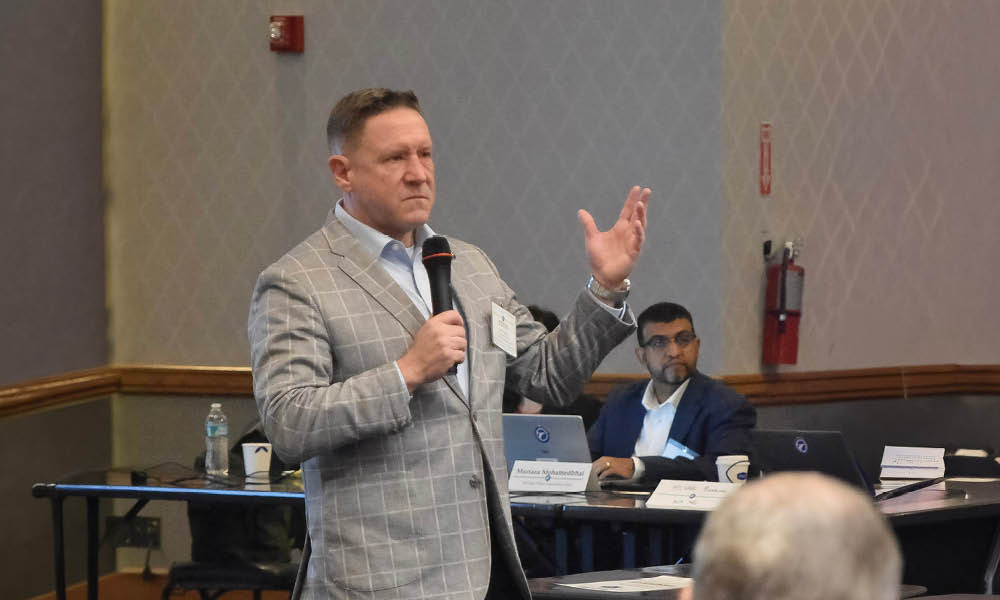
“We really work on two fronts,” said Capt. Wendy Morse, ALPA’s first vice president and national safety coordinator. “That’s because training equals safety. People sometimes undervalue and underestimate the importance of good training. But all you have to do is not have it to understand how critical it is.”
Morse also took the opportunity to highlight the Association’s institutional strength, attributing the ASO’s effectiveness in advocating for aviation safety in part to continuous collaboration between pilot volunteers and professional staff.
“We have the best of both worlds,” observed Morse. “We have some of the most amazing engineering and air safety professional staff, who do outstanding work, as well as the great work of our pilot volunteers. You can’t have one without the other. You need both.”
Capt. Steve Jangelis (Delta), the ASO Aviation Safety Group chair, reinforced the importance of volunteer participation and collaboration, and encouraged open discussion and information sharing among pilot groups, noting that the strength of ALPA’s safety structure depends on active engagement at every level.
“When we start talking about property issues, make sure you tell me about the biggest thing going on at your individual properties,” said Jangelis. “I’d like to hear it so that we can make sure that the union’s national leadership team knows about it.”
Capt. JC Patchell (Jazz), the Aviation Safety coordinator–Canada, provided an overview of aviation safety developments affecting Canadian carriers, reinforcing ALPA’s binational safety responsibilities and the importance of pilot engagement in regulatory and operational discussions. Capt. Brian Moynihan (Alaska), the Safety Council chair, and Capt. Randy Symanski (Spirit), the Training Council chair, outlined priorities within their respective domains while emphasizing the need for alignment between safety analysis and training design.
Joint Review of Operational Safety Issues
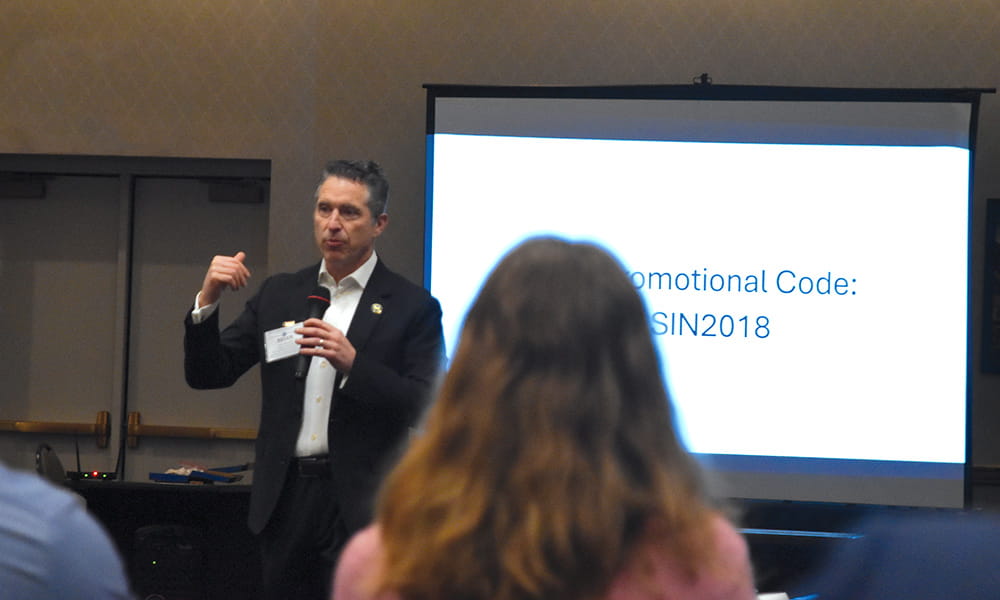
ALPA’s technical group chairs offered a comprehensive overview of operational safety issues.
- Capt. Doug Marchese (JetBlue), the Association’s Flight Time/Duty Time Committee chair, discussed ongoing fatigue concerns and the importance of science-based scheduling protections.
- Airspace and procedural developments were addressed by Capt. Craig Boxrucker (Alaska), the Air Traffic Services Group chair, who reviewed modernization initiatives and evolving air traffic challenges.
- Safety Management Systems (SMS) were covered by Capt. Kevin Slovinksi (Spirit), the SMS Group chair, who highlighted hazard-identification and risk-assessment processes.
- Capt. Jeff Mee (United), the Accident Analysis & Prevention Group chair, spoke about recent aviation accident investigations.
- Human performance considerations were discussed by Capt. Todd Lisak (JetBlue), the Human Factors & Training Group chair, and F/O Abigail Pasmore (United).
Additionally, Capt. Jeff Sedin (United) gave a briefing on the airport and ground environment; Capt. Chris Sidor (United) discussed aircraft design and operations; Capt. Dave Schlichting (FedEx Express) talked about dangerous goods; and Capt. Matthew Fischbacher (Cargojet) examined environmental considerations.
Safety and Training In-Depth Breakouts
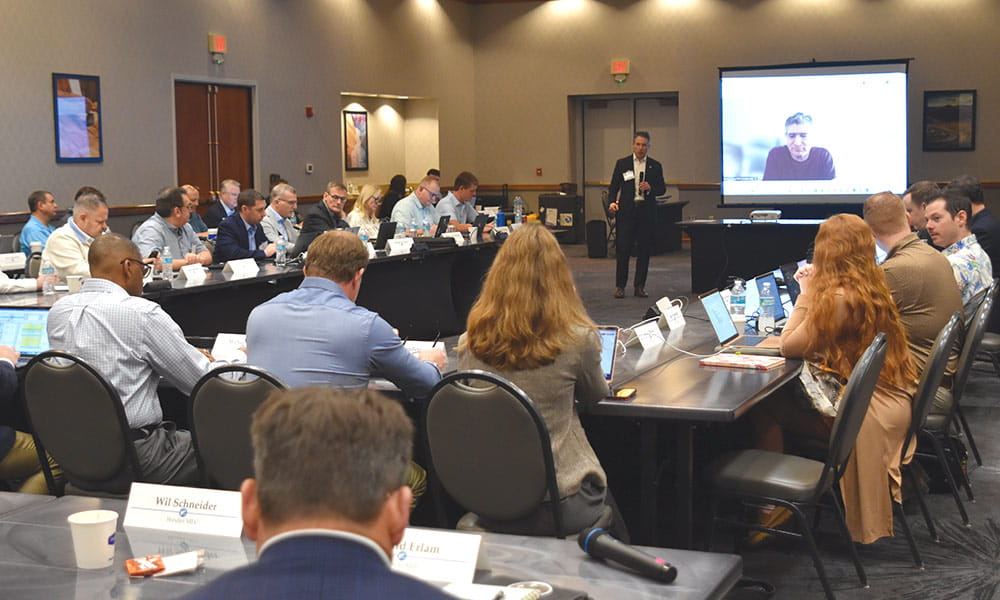
On the second and third days of meetings, Safety Council and Training Council volunteers met separately to review issues in greater depth.
- Katie Murphy, the FAA’s Safety Culture Programs manager, and Rick Buhl, the FAA’s Safety Management Branch section branch manager, gave a presentation on FAA safety culture research, examining how organizational dynamics influence reporting behavior and long-term safety outcomes.
- Capt. Helena Cunningham (Delta), her pilot group’s Central Air Safety Committee chair, and Moynihan led a discussion focused on strengthening positive safety culture within pilot groups.
- Dan Keslar, a test engineer from the FAA’s Fire Systems Laboratory, joined Schlichting to review lithium battery fire risks and containment strategies, reinforcing the importance of vigilance in hazardous-materials transport.
- Capt. Mike Kendrick (JetBlue), his pilot group’s Central Air Safety Committee chair, and Capt. Charles “Von” Ritter (JetBlue), the vice chair, spoke about the threat of fume events.
- Capt. Jim Perry (FedEx Express), his pilot group’s Central Air Safety Committee chair and ALPA’s Cargo Committee chair, discussed the roles and responsibilities of ALPA’s safety experts regarding adding value to an SMS structure, and Capt. Ken Nix (FedEx Express), his pilot group’s Central Air Safety Committee vice chair, reviewed Aviation Safety Action Program/Flight Operation Quality Assurance Crosstalk with regard to improving pilot learning culture.
- F/O James Norman (Delta) talked about the potential role of artificial intelligence (AI) in enhancing safety data analysis. AI-assisted tools may help identify correlations and emerging risks more efficiently while preserving confidentiality and human oversight. Balancing trust and innovation when interacting with voluntary safety programs is a complicated concept due to the sensitivities within safety data.
- Boxrucker provided an expanded briefing on air traffic control modernization efforts and their operational implications, emphasizing continued pilot engagement in safety risk assessments and system redesign.

While the Safety Council examined operational risk and safety culture, the Training Council focused on instructional strategy and regulatory development.
- Symanski discussed the importance of thoughtful implementation and pilot oversight as AI tools expand within training environments.
- Capt. Aric Newsted (United), the Training Council vice chair, addressed pilot monitoring training and the critical role of the monitoring pilot in managing workload and detecting deviations.
- Lisak provided an update on the Air Carrier Training Aviation Rulemaking Committee, reviewing regulatory developments affecting training standards.
New Leadership Elected
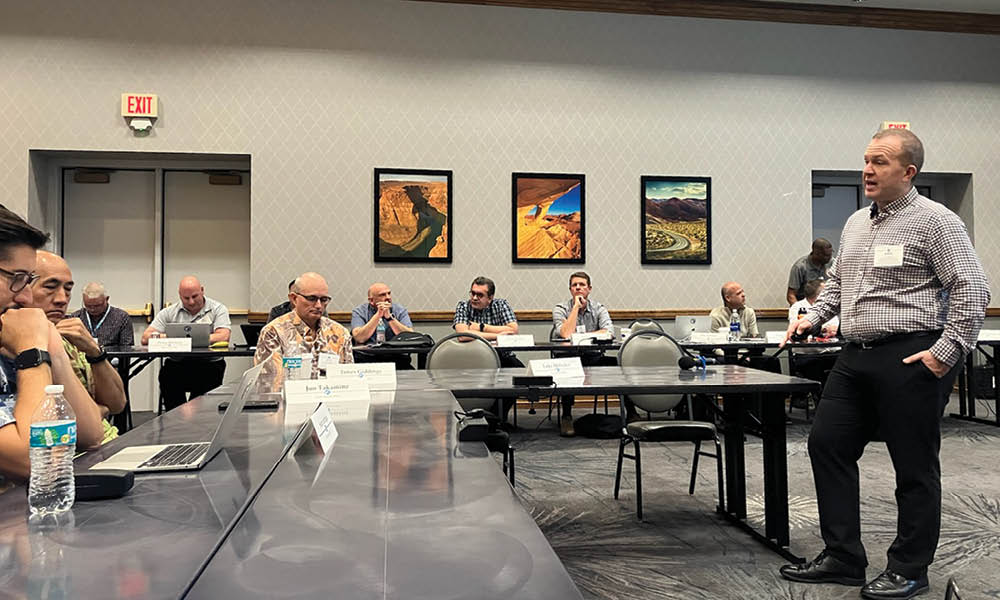
Elections for Safety Council and Training Council leadership took place on the final day of meetings. The Safety Council elected Kendrick to be the new chair, with Capt. Andrew Lepkowski (Kalitta Air) serving as vice chair. Symanski will continue serving as the Training Council chair with Newsted continuing as Training Council vice chair.
Increasingly Interconnected
From fatigue mitigation and lithium battery containment to AI-assisted data analysis and enhanced pilot monitoring training, the issues discussed in Las Vegas reflect the complexity of modern airline operations. For line pilots, much of this work unfolds behind the scenes. Yet it directly influences training programs, reporting systems, operational procedures, and regulatory advocacy.
“I feel strongly that we’re good when we share information with each other,” said Moynihan, the outgoing Safety Council chair. “But when this council can act and do things to make a difference at an individual property or within ALPA, I feel that’s when we’re most effective.”
By fostering collaboration across technical disciplines and reinforcing the essential link between training and safety, ALPA continues to ensure that pilot expertise remains at the center of aviation safety, both today and in the future.

Featured Articles


